REVIEW · GOREME
Cappadocia Home Cooking Experience
Book on Viator →Operated by Skyway Travel Cappadocia · Bookable on Viator
Food tells stories. That is the point here. In Göreme, this home cooking school pairs hands-on cooking with fresh garden ingredients and a small, warm family vibe. You’ll learn regional dishes, cook them yourself, and end up eating a full meal you made, Turkish tea included.
Two things I really like. First, the class is built around real ingredients from the family garden—fruits, vegetables, and spices—so the food tastes like something local, not like a performance. Second, the group stays small (max 12), which makes it easier to ask questions while you chop, stuff, roll, and fry.
One thing to consider: this experience runs on good weather, and it’s an outdoors-to-kitchen flow because you’ll pick ingredients in the garden. If weather goes sideways, you may need to reschedule.
In This Review
- Key highlights you should care about
- A restored stone-arch house where cooking feels personal
- Pickup, timing, and what the 3 hours are really for
- First stop: the organic garden (where flavor starts)
- Cooking lessons built around real regional dishes
- Yaprak Sarma and the art of rolling
- Börek: learning pastry technique by doing
- Pilav and Salata: simple, but not boring
- Mantı: small dumplings with big personality
- Karnıyarık: the comforting stuffed eggplant moment
- Soup and how it ties the menu together
- Kadayıf: dessert with honey and crunch
- Eating what you cooked: the real end goal
- Price and value: what $114.39 buys you
- Who this home cooking school is perfect for
- A few practical things to plan for
- Should you book Cappadocia Home Cooking?
- FAQ
- What’s the duration of the Cappadocia home cooking experience?
- How much does it cost per person?
- Is pickup and drop-off included?
- Do I need to bring anything for cooking?
- What language is the class offered in?
- How many people are in the group?
- What dishes are included?
- Is the experience weather-dependent?
- What’s the cancellation policy?
Key highlights you should care about
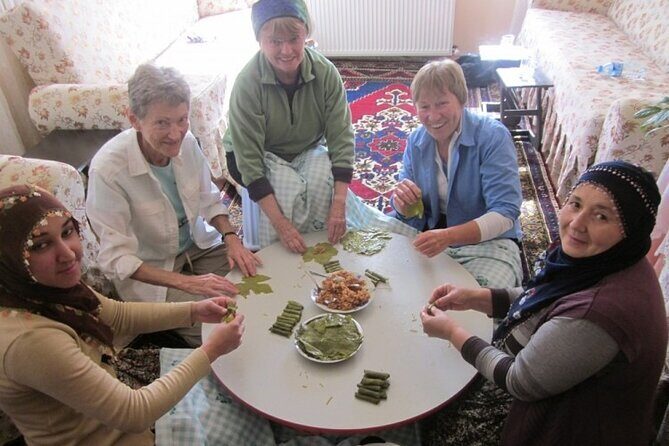
- Stone-arch home setting in a village near Göreme, restored for a warm welcome
- Organic garden ingredient picking, including vegetables and herbs you’ll cook right after
- Small group size (up to 12), so you get more hands-on time
- Hands-on menu with classic dishes like Mantı, Karnıyarık, Yaprak Sarma, Börek, and Kadayıf
- Full meal payoff: you cook multiple courses, then sit down to eat them
- English available plus pickup and drop-off for easier timing
A restored stone-arch house where cooking feels personal
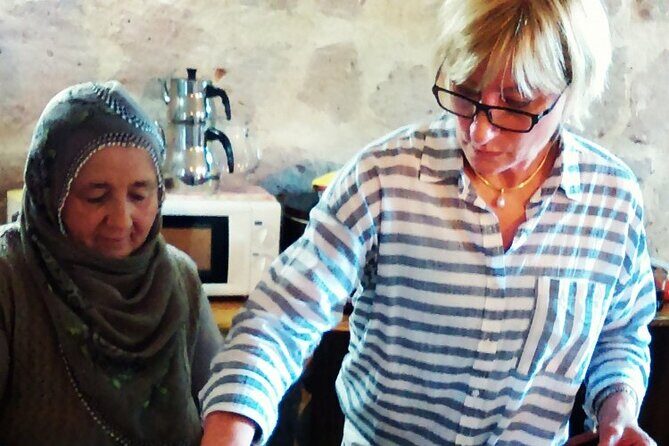
Cappadocia has no shortage of tours. This one works because it slows you down and puts you at the table with the people who actually cook the food. The setting is a traditional stone arch house, part of a village environment, and it feels more like you’re being invited inside than processed through a schedule.
What that means for you: you’re not just watching someone cook. You’re doing it—kneading, rolling, stuffing, shaping—then tasting your own work. When the atmosphere is this cozy and family-run, you end up paying attention to details you’d normally skip, like how a dough should feel or how herbs change a sauce.
It also helps that this is not a huge group thing. With a maximum of 12 travelers, you can realistically ask what to do next without feeling rushed. And you can learn the why behind the how, since the instructors can actually talk to you.
Other Cooking & Culinary Experiences reviews in Cappadocia & central Turkey

Pickup, timing, and what the 3 hours are really for
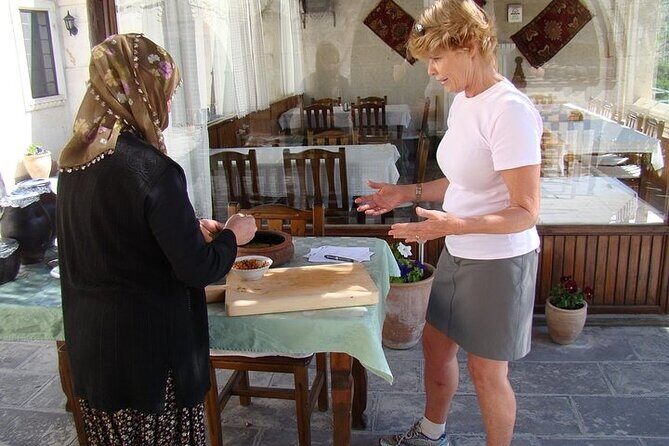
The session is about 3 hours. That sounds short until you see the structure. You’re moving through a sequence: meeting the host team, touring the garden, picking ingredients, then cooking multiple dishes, finishing with tea and dessert, and finally eating.
Pickup is offered, and drop-off is included, which matters in Cappadocia. You don’t want to lose half your morning (or afternoon) to logistics. Instead, you can show up ready to cook.
Also, you get a mobile ticket and English is available. If you’ve ever been in a cooking class where language gets in the way, this is one of those times it usually won’t.
Practical tip: wear comfortable clothes you can get food on. You will be close to the action. If you have allergies, mention them early—this is a hands-on kitchen, not a buffet line.
First stop: the organic garden (where flavor starts)
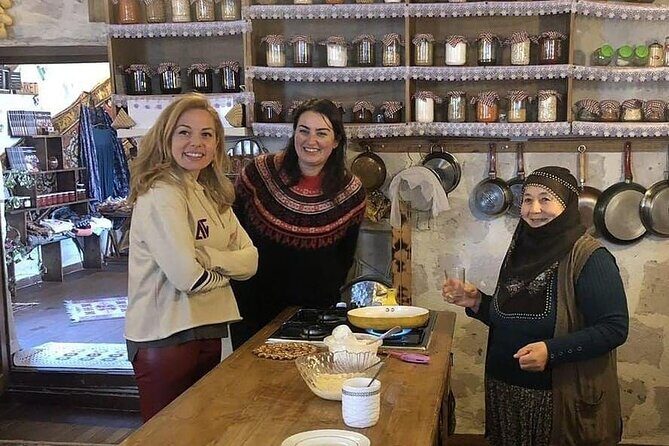
Before the stove starts doing its job, you’ll meet the organic garden and pick fresh vegetables and herbs. That part is one of the most valuable pieces of the experience, because you see ingredients at their source. Fresh herbs don’t just taste good—they smell good in a way you can’t fake later.
This is also where the class connects food to place. As you pick, you’re not just grabbing leaves. You’re learning about the village, its traditions, and how people live there. That context helps the meal make sense when you sit down.
From a value standpoint, this garden stop is what separates a basic cooking activity from something more memorable. You’re not only learning recipes; you’re learning ingredient thinking. The instructors use what they grow, and they treat those flavors as part of daily life.
Cooking lessons built around real regional dishes
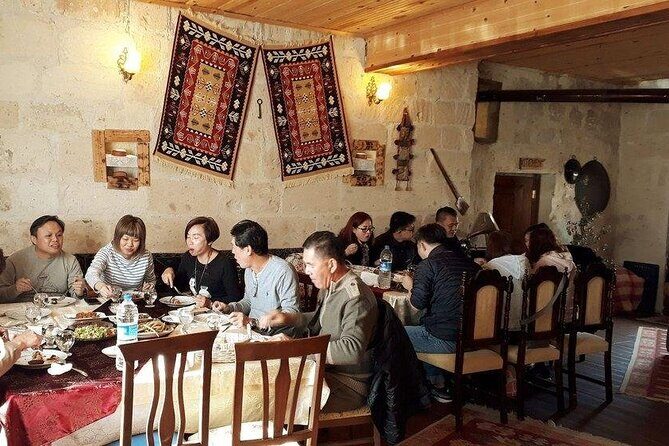
The menu includes a mix of starters, mains, and dessert. The class style is simple: you learn, you work in the kitchen, and you end up cooking a full spread.
Here’s what you should expect from the kind of dishes they teach:
- Starters and sides: Yaprak Sarma (stuffed vine leaves), Salata (salad), Pilav (pilaf), Börek
- Mains: Mantı, Karnıyarık
- Dessert: Kadayıf
- Plus traditional Turkish tea during the experience, and snacks along the way
Let’s translate that into what you’ll actually do in the kitchen.
Yaprak Sarma and the art of rolling
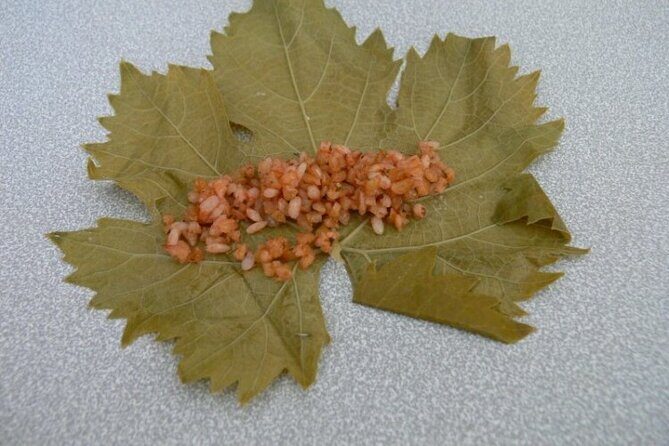
Stuffed vine leaves can look fussy, but that’s exactly why it’s satisfying to learn. You’ll get hands-on with rolling and portioning. The payoff is big: once you taste what you rolled yourself, you’ll understand why this dish shows up in homes across the region.
This is also a good dish for learning texture and balance—how thin the wrapping should be, and how filling thickness affects the final bite.
Other cooking classes in Goreme
Börek: learning pastry technique by doing
Börek is one of those dishes that can be either heavy or crisp depending on how it’s handled. In a class like this, you’re watching less and practicing more. Even if you don’t nail it on the first attempt, you usually understand what makes the difference by the end of the session.
Pilav and Salata: simple, but not boring
Pilaf and salad often get treated like side dishes. Here, they help you build the full meal rhythm. Pilav gives you the carb base that makes the mains feel complete. The salad refreshes the plate, which is important when you’re eating several cooked items in one sitting.
Mantı: small dumplings with big personality
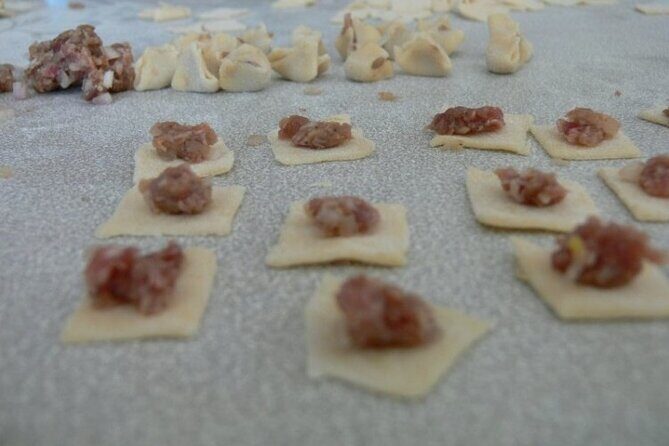
Mantı is one of the dishes that makes Turkish home cooking feel distinctive. It’s not just pasta-like shapes. The whole experience is about portioning and control—making small pieces consistently so everyone gets a satisfying bite.
If you enjoy technique, mantı is a fun one to learn. If you just enjoy eating, you’ll still be happy you made it yourself.
Karnıyarık: the comforting stuffed eggplant moment
Karnıyarık is the kind of main that makes you sit back after your first forkful. Stuffed eggplant carries flavor and softness, and it’s the dish that often wins people over quickly.
In a kitchen class, the main value is that you see how stuffing and cooking time work together. You’ll learn that the dish is more about gentle cooking than speed.
Soup and how it ties the menu together
The class includes soup as part of the structure (they’ll offer a soup course during your cooking). Soup is a smart way to start because it sets the flavor baseline for everything after it. It also gives you something warm in your system while the more hands-on dishes are cooking.
Kadayıf: dessert with honey and crunch
Kadayıf is a classic Turkish dessert built around shredded pastry that becomes crisp and syrupy. The best part is that dessert doesn’t feel like an afterthought. It’s part of the full arc of the meal.
One extra detail that adds character: the honey used can come from their own hives, which turns dessert from generic sweet into a local ingredient story. That doesn’t just taste different—it gives the dessert a sense of origin.
Eating what you cooked: the real end goal
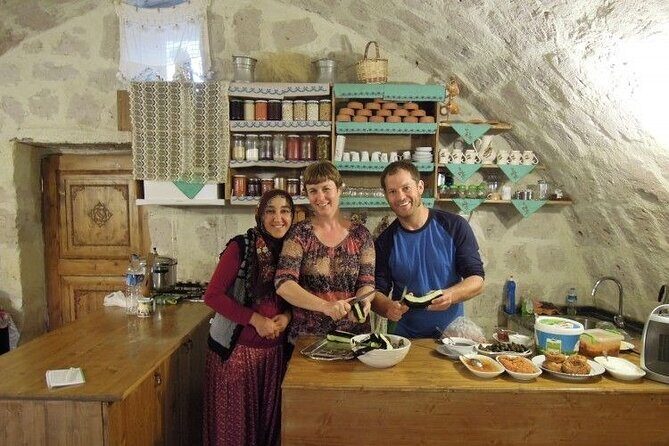
A good cooking class doesn’t end when the food is plated. It ends when you eat together—and you actually taste what you made. Here, after you finish cooking, you enjoy a meal built from your dishes.
That communal meal is where the experience clicks. Food is the common language, and the family stories fill in the gaps. In these kitchens, conversation often matters as much as the recipes. You’ll talk about village life, what people grow, what traditions matter, and how family recipes get passed along.
A small cultural bonus: one guest shared that a family elder offered a Turkish name during the visit. Even if you don’t expect a moment like that, it tells you the vibe—warm, personal, and not overly formal.
Price and value: what $114.39 buys you
At $114.39 per person for about 3 hours, this isn’t a budget cooking class. But it often feels fair because you’re paying for more than instruction.
Here’s what you’re getting:
- Pickup and drop-off
- Products for cooking
- Snacks, coffee and/or tea
- A full lunch/dinner meal
- Small group limit (12 max)
- Ingredient picking from a family garden
If you’re comparing this to cheaper classes, the main difference is scale and inputs. You’re not bringing your own ingredients. You’re not paying for a quick tasting. You’re cooking multiple dishes and then eating them, with the added value of fresh garden produce and a family-run setting.
Also, being booked about 22 days in advance on average suggests it’s a popular slot. If your schedule is fixed, you’ll usually want to lock in earlier rather than later.
Who this home cooking school is perfect for
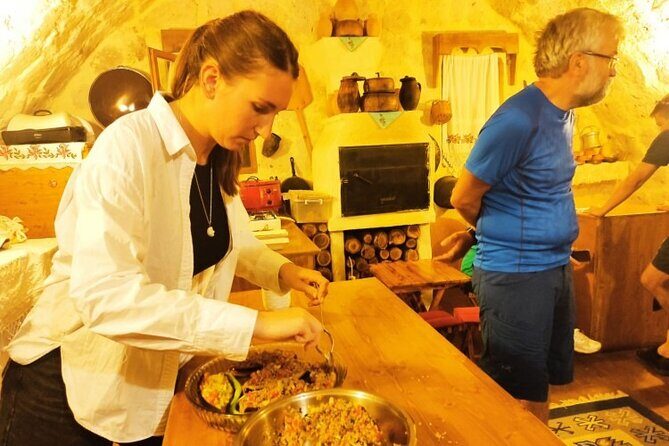
This experience fits best if you want hands-on learning and you like the idea of eating a full meal that came from your own work.
You’ll likely enjoy it if you:
- Like cooking classes that focus on technique, not just tasting
- Want a quieter, more local option compared to big sightseeing tours
- Travel with food restrictions and want to ask about adjustments (there was at least one vegetarian accommodation mentioned in the experience feedback)
- Prefer small groups over crowded activities
If you’re the type who expects a long lecture, this might feel too practical. The point is getting you cooking fast, with guidance along the way.
A few practical things to plan for
This is a weather-dependent experience. You’ll be outside at least part of the time to pick ingredients, so you’ll want to dress for the conditions and be flexible if the plan shifts.
Because you’re handling food in a home kitchen, you should also think about:
- Comfortable shoes (kitchens and garden paths are not always flat)
- Arriving on time for pickup so the garden visit stays smooth
- Mentally preparing for a lot of cooking in a short window—3 hours goes by quickly once you start
Should you book Cappadocia Home Cooking?
If you want an authentic meal with real ingredient stories and a small-group kitchen experience, I think this is a strong pick. The combination of garden picking, hands-on cooking, and a full meal is what makes the value work.
Skip it only if you strongly prefer passive activities or you’re traveling when weather is unpredictable enough that you don’t want to deal with possible rescheduling.
If you book, do it with one mindset: you’re not there to watch cooking. You’re there to make it, taste it, and take a piece of village life home with you.
FAQ
What’s the duration of the Cappadocia home cooking experience?
It runs for about 3 hours.
How much does it cost per person?
The price is $114.39 per person.
Is pickup and drop-off included?
Yes. Pickup and drop-off are included.
Do I need to bring anything for cooking?
The experience includes products for cooking. You’ll just want to wear comfortable clothes for food prep.
What language is the class offered in?
The experience is offered in English.
How many people are in the group?
The tour has a maximum of 12 travelers.
What dishes are included?
The sample menu includes Yaprak Sarma, Salata, Pilav, Börek, Mantı, Karnıyarık, and Kadayıf, along with Turkish tea, snacks, and the meal you help prepare.
Is the experience weather-dependent?
Yes. It requires good weather. If canceled due to poor weather, you’ll be offered a different date or a full refund.
What’s the cancellation policy?
You can cancel for a full refund up to 24 hours in advance. After that time, refunds aren’t available. The experience also has a minimum traveler requirement, and if it doesn’t meet that minimum, you’ll be offered a different experience or a full refund.