REVIEW · AVANOS
Derinkuyu Underground City Tour
Book on GetYourGuide →Operated by Booking Guide Turkey · Bookable on GetYourGuide
Eighty-five meters underground changes your sense of scale. Derinkuyu is Cappadocia’s largest and deepest underground city, with about 8 levels carved into volcanic rock and designed for real day-to-day survival. I like how it turns big, dramatic claims into something you can walk through—narrow passages, communal rooms, and the practical logic of its ventilation.
My other favorite part is the human one: the guide keeps the story clear and makes the tunnels feel understandable, not just spooky. In tours led by guides like Mahmut and Mehmet (sometimes heard as Mahmoud), the pacing stays steady and you learn what each space was for. The main drawback is physical and mental comfort—expect stairs, tight spots, and the kind of dim enclosure that can feel claustrophobic for some people.
In This Review
- Derinkuyu 101: Why this underground city is the big deal
- The 4-hour flow: pickup, guided touring pace, and included lunch
- Entering the 8 levels: tunnels, rooms, and the feeling of underground life
- The ventilation and engineering details that make it believable
- The timeline inside the walls: Proto-Hittites to Byzantines
- Skip-the-line energy and early timing to avoid the crowd crush
- Who will love this tour (and who should think twice)
- Price and value: is $117 per person worth it?
- Quick tips to make your Derinkuyu visit easier
- Should you book the Derinkuyu Underground City Tour?
- FAQ
- Where are pickups offered, and what time does the tour start?
- How long is the Derinkuyu Underground City Tour?
- What’s the price for the tour?
- What does the tour include?
- Is lunch included?
- How many levels and how deep is Derinkuyu?
- Is the tour offered in English?
- What if plans change?
- Is transportation provided to and from my hotel?
Derinkuyu 101: Why this underground city is the big deal
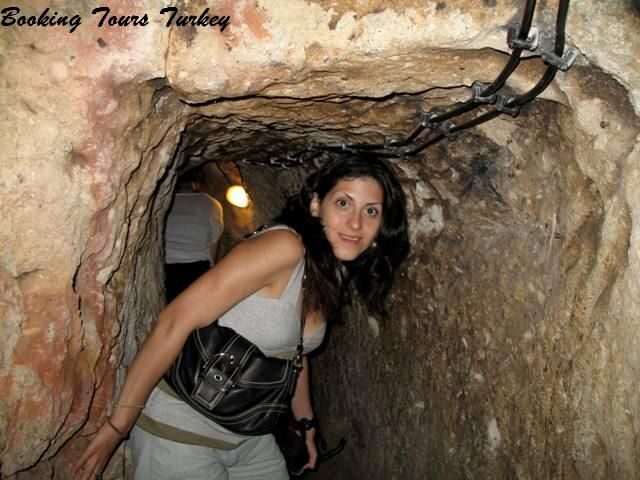
Derinkuyu sits in central Anatolia and is often described as the standout among Cappadocia’s subterranean settlements. The numbers are what grab you first: around 85 meters down and 8 levels open to visitors. That’s not a “small set of rooms” kind of site—it’s a full underground system.
What makes it especially interesting is that it wasn’t a one-time build. Evidence and local scholarship point to multiple groups using the space over time, including Proto-Hittites, Hittites, Romans, and Byzantines. You’re not just seeing ancient rooms—you’re seeing how later people adapted earlier infrastructure for their own needs.
And the design is practical, not magical. The city includes tunnels, chambers, kitchens, stables, churches, storage rooms, and ventilation shafts. Even without getting technical, you can feel the logic: this place was built for staying alive, not just hiding for an afternoon.
The 4-hour flow: pickup, guided touring pace, and included lunch
This is set up as a half-day outing, usually starting with pickup around 09:00 from Avanos, Göreme, or Ürgüp. You ride in a fully air-conditioned coach, and you get an English-speaking professional guide to keep the visit organized. Return transfer to your hotel is included, so you don’t have to plan the timing back on your own.
The tour runs about 4 hours, which is a good length for a site like this. Too short and you’d miss the context; too long and you’d fatigue fast in stair-heavy, enclosed spaces. I like that the schedule leaves room for the main underground highlights without turning it into a marathon.
Lunch is included, which matters more than it sounds. Underground cities can make you forget food until late in the day, and then you’re hunting for something while you’re tired. Having lunch built in keeps the experience smoother, especially if you’re pairing this with other Cappadocia activities.
Other Underground Cities Tours reviews in Cappadocia & central Turkey
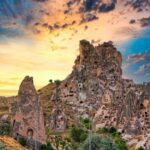

Entering the 8 levels: tunnels, rooms, and the feeling of underground life
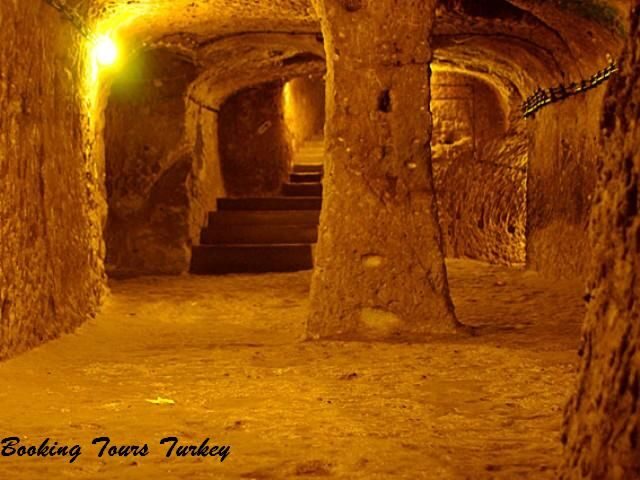
Once you step into Derinkuyu, the scale starts working on you. Corridors can be tight, then suddenly open into larger communal spaces. That rhythm helps you picture daily life: movement for chores, gatherings for community, and storage for survival.
Here’s what to watch for as you go deeper through the 8 levels:
- Kitchens and storage areas that show how people planned for food and supply.
- Stables that make the place feel less like a bunker and more like a functioning settlement.
- Churches that hint at changing priorities as different groups used the city.
- Ventilation shafts that explain how airflow and habitability were handled.
One small but important consideration: the visit includes narrow passages and stairs. Some routes feel straightforward; other stretches can be a slow climb. If you’re sensitive to enclosed spaces, you’ll want to pace yourself and take breaks when you can.
Also, plan your effort for the return up. One practical tip from real-world experience: the climb back up can leave you out of breath, and it can feel tougher if you’re wearing a mask. You don’t need to panic about it, but you should treat the stairs as part of the plan, not an afterthought.
The ventilation and engineering details that make it believable
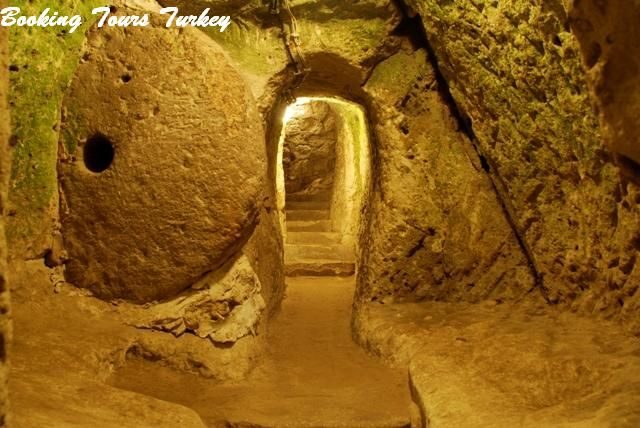
Underground cities sound unbelievable until you see what was designed to make them usable. In Derinkuyu, ventilation is one of the key themes. The presence of ventilation shafts helps explain how thousands of people could survive for long periods without the air running out.
You’ll also notice how the spaces connect. Tunnels link chambers, and rooms appear sized for practical tasks rather than decoration. Even if your guide doesn’t go super technical, the layout itself communicates engineering smarts: keep traffic moving, keep essential functions close, and manage airflow through planned openings.
I especially like this part because it changes how you think. Instead of seeing it as a single refuge space, you start seeing it as a network. That’s when the site stops being a “wow moment” and becomes an actual lesson in human problem-solving.
The timeline inside the walls: Proto-Hittites to Byzantines
Derinkuyu didn’t belong to just one civilization, which is why the story stays interesting. The commonly cited sequence includes Proto-Hittites, then the Hittites, followed by Romans and Byzantines. That means what you see isn’t frozen in time.
As different groups occupied the city, they adapted it. In some periods, it likely worked as protection during invasions. In others, it functioned as a longer-term place to live and continue daily routines underground.
Your guide should help you connect the physical spaces to that timeline. In tours led by guides like Mahmut, the explanations often tie the rooms to why they mattered. Guides like Mehmet (Mahmoud) have also been praised for safe, clear navigation through the tunnels—important because the layout can be confusing if you’re on your own.
Skip-the-line energy and early timing to avoid the crowd crush
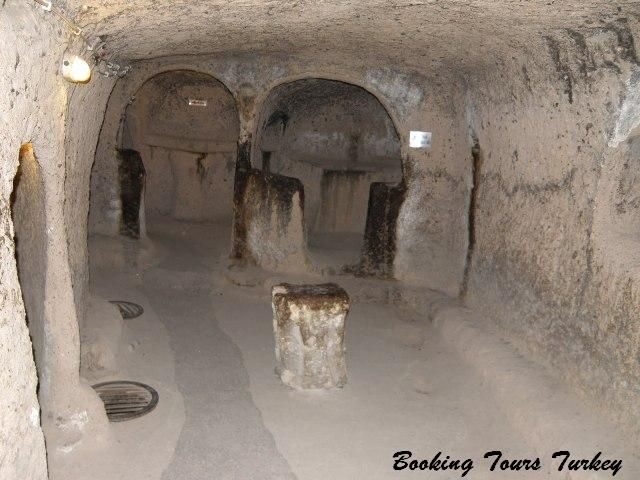
Derinkuyu is popular, which is exactly why timing matters. If you can, aim for an earlier slot. In one experience, being there before 10:00 helped people tour before larger groups arrived, and that made the underground feel less cramped.
This isn’t a guarantee, but the principle is solid: fewer bodies in narrow corridors makes the experience more comfortable. If you’re prone to claustrophobia, earlier timing can make a noticeable difference in how you feel walking through the tight passages.
There’s also a practical perk built in: you can skip the ticket line. That reduces wasted time in daylight queues and helps you get to the underground sections faster, while you still have energy.



Who will love this tour (and who should think twice)
This tour is a strong match if you enjoy:
- Historical sites where engineering matters, not just old stone walls.
- Architecture you can walk through and understand spatially.
- Hands-on storytelling from an English-speaking guide.
You’ll also like it if you want something different from fairy chimneys. Cappadocia is famous for above-ground scenes, but Derinkuyu adds a second layer: how people planned survival when danger moved closer.
That said, consider this if you:
- Dislike tight corridors or dim enclosed spaces.
- Struggle with stairs or short bursts of climbing.
- Get anxious in places that feel underground and enclosed.
The good news is that the visit is guided, and the tour approach is designed to keep you moving safely. Still, your comfort level should guide your decision more than the hype.
Price and value: is $117 per person worth it?
At $117 per person, it’s not a budget add-on. The value comes from what’s included and how it reduces friction in real life.
You’re getting:
- Hotel pickup and return transfer from Avanos, Göreme, or Ürgüp.
- Transportation in a fully air-conditioned coach.
- Entrance fees for the site.
- An English-speaking professional guide.
- Lunch.
- Skip-the-ticket-line access.
If you tried to assemble this yourself, you’d likely pay for transportation, pay separate entrance fees, and spend time coordinating timing and ticketing. Here, you trade flexibility for convenience—and for many people, that’s worth the price.
Duration also supports the value. At about 4 hours, you’re not losing a full day. For anyone staying in Göreme or the nearby towns, this is a tight, efficient way to experience a major Cappadocia highlight with less stress.
Quick tips to make your Derinkuyu visit easier
You can’t control the underground air or the tight corridors, but you can control your comfort.
Here’s what I’d do before you go:
- Wear comfortable walking shoes with good grip for stone steps.
- Dress in light layers so you can adjust as the temperature changes underground.
- Use a steady pace. Stop briefly when you need to, especially if you feel tightness in enclosed spaces.
- Keep water in mind. Lunch is included, but you’ll still want energy for the walk.
Finally, go in with the right mental attitude. This is a practical survival city. If you look at each room as a function—food, storage, worship, movement—you’ll get more out of the walk.
Should you book the Derinkuyu Underground City Tour?
Book it if you want the most impressive of Cappadocia’s underground options, and you like guided context that turns rooms and corridors into a real story. The combination of major depth (about 85 meters), 8 levels, and a professional English guide makes it one of those tours that feels worth the time.
I’d think twice if you’re very sensitive to enclosed spaces or you know stairs will be hard for you. In that case, you might still enjoy the story, but you’ll want to plan carefully around comfort and pace.
If you’re on the fence, your best tiebreaker is this: do you want engineering-and-human-survival history, with minimal logistics to manage? If yes, then this Derinkuyu tour is an easy yes.
FAQ
Where are pickups offered, and what time does the tour start?
Pickup is offered from Avanos, Göreme, or Ürgüp at approximately 09:00.
How long is the Derinkuyu Underground City Tour?
The tour lasts about 4 hours.
What’s the price for the tour?
The price is $117 per person.
What does the tour include?
It includes hotel pickup and return transfer, transportation in an air-conditioned coach, a professional English-speaking guide, all entrance fees mentioned in the itinerary, skip-the-ticket-line access, lunch, and the tour duration includes the underground visit time.
Is lunch included?
Yes, lunch is included.
How many levels and how deep is Derinkuyu?
Derinkuyu has 8 levels and reaches about 85 meters below the surface.
Is the tour offered in English?
Yes, the tour guide is live and English-speaking.
What if plans change?
Free cancellation is available up to 24 hours in advance for a full refund.
Is transportation provided to and from my hotel?
Yes, you get return transfer to your hotel after the tour.