REVIEW · GOREME
Southeast Anatolia Tour (Nemrut, Gobeklitepe, Zeugma)
Book on Viator →Operated by Hereke Travel · Bookable on Viator
History with an early alarm. That’s what makes this Southeast Anatolia run so good: you jump from the world’s earliest temple site to the Hellenistic giant statues of Mount Nemrut, then finish with Zeugma’s mosaics. I like how the day pacing is built around major sights (not random stops), and I also like that you’re not doing this solo—your guide Ramazan brings real enthusiasm for Turkish history and keeps the story straight from start to finish.
The itinerary also feels practical for a mixed group, which matters when you’re traveling with kids or older relatives. Meals are handled (2 breakfasts, 2 dinners, 3 lunches), and the big entrances listed are included, so you spend more time looking and less time figuring. One thing to consider: the schedule is tight and includes very early starts, so if you hate dawn plans and long drives, this may feel like a lot.
In This Review
- Key things to know before you go
- From Göreme to the southeast: what this tour really delivers
- Day 1: Karatay Han and the trade-route story you don’t expect
- Day 2 first: Mount Nemrut at dawn and why timing matters
- Day 2 second: Göbeklitepe and the shock of human beginnings
- Day 3: Zeugma Mosaic Museum and how replicas help you picture the city
- Meals, tickets, and the value math that actually matters
- Who this fits best (and who might want to adjust expectations)
- Weather and timing: the one variable you can’t ignore
- Should you book this Southeast Anatolia tour?
- FAQ
- How long is the Southeast Anatolia Tour?
- What is the price per person?
- Where does the tour operate from?
- Are pickup and mobile tickets included?
- Is this a private tour?
- What meals and lodging are included?
- Are admission tickets included for the stops?
- What happens if the weather is bad?
- Is cancellation free, and how far ahead can I cancel?
Key things to know before you go
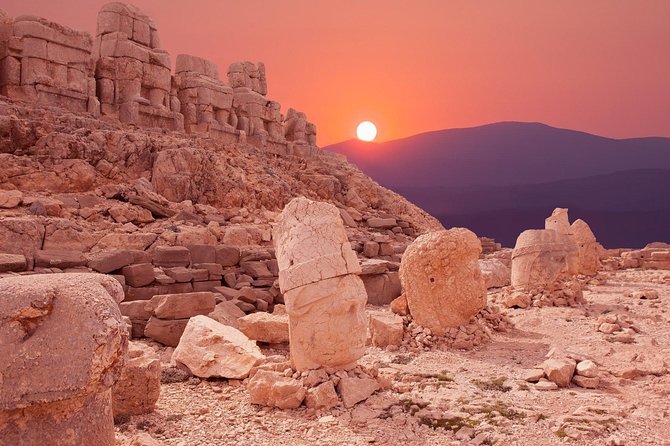
- A day built around dawn on Nemrut Dağı, timed for the best morning light.
- Gobeklitepe’s shock factor: monumental stone structures tied to Pre-Pottery Neolithic hunters.
- Museum time with context at Zeugma, using room-scale replicas to help the site click.
- Karatay Han as the palate cleanser, a caravanserai that shows trade-road history between big-ticket ruins.
- Small-group energy with a private setup where only your group participates.
- Ramazan-style storytelling that connects what you’re seeing, instead of listing dates.
From Göreme to the southeast: what this tour really delivers
This is a 3-day tour built like a history highlight reel, but with an important difference: each stop has a different kind of “wow.” One moment you’re staring at one of the earliest known ceremonial complexes on Earth. Next, you’re watching the morning light hit massive statues perched on a high peak. Then you’re back at street level, learning how a Roman-era city life can survive through broken but preserved art.
The value is in how much is packed in without making it feel chaotic. You’re not choosing between sights; you’re getting them in a sensible order. And because the package includes accommodation (2 nights) plus meals (2 breakfasts, 2 dinners, 3 lunches), you’re protected from the common trip problem: spending your day hunting for food and squeezing in extra stops.
Also, this isn’t a fly-by group bus situation in spirit. It’s listed as a private tour/activity—only your group goes—so the pacing can be tuned to your group. That detail matters on long days with early mornings, when you’d rather not spend time waiting for a big crowd.
If you're still narrowing it down, here are other tours in Goreme we've reviewed.


Day 1: Karatay Han and the trade-route story you don’t expect
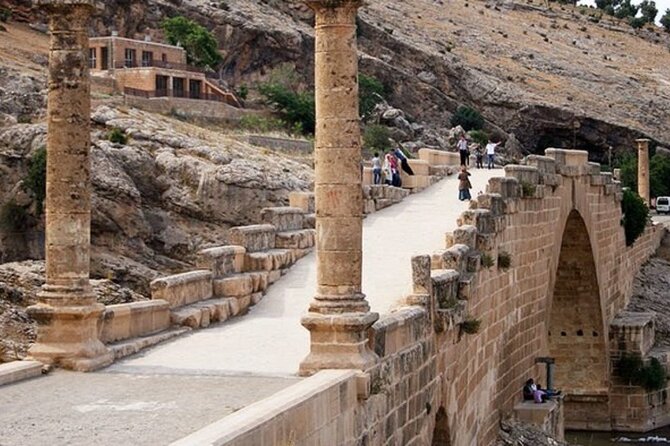
Day 1 starts with Karatay Han, a caravanserai built on the old Kayseri–Malatya road, part of a major trade route moving people and goods toward Syria. The setting is quiet today, but the point of this stop is to show you the switch: places that look sleepy in the present were once traffic hubs.
It’s a shorter stop (about 25 minutes), but that’s not a flaw. It’s a smart breather before bigger days. Instead of trying to cram a long museum session on day 1, you get a clear, compact introduction to how roads shaped life in Anatolia.
What I’d watch for when you’re there: look at the idea of a “hotel” for travelers and traders. A han wasn’t just shelter. It was a node in the network—where information traveled as much as goods. This little context helps the next days make sense, because ancient history isn’t only temples and kings. It’s also the routes and routines that allowed people, ideas, and technologies to move.
Day 2 first: Mount Nemrut at dawn and why timing matters
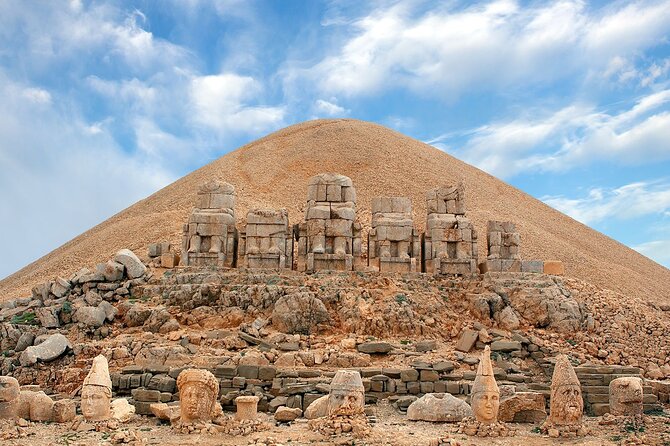
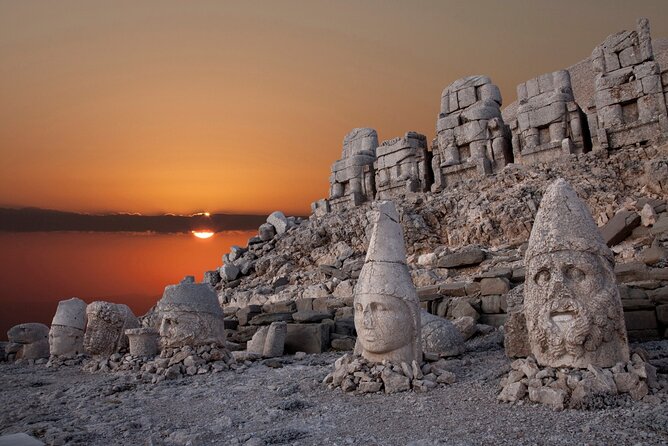
Nemrut Dağı is the centerpiece day for many people, and it’s easy to see why. You’re in the Eastern Taurus mountain range, and the experience is built around the idea of sunrise. The site is the Hierothesion, a temple-tomb and house of the gods built by King Antiochos I of Commagene (69–34 B.C.). The statues—associated with Antiochos and other figures—are what you remember, and the morning light is what makes them feel unreal.
The listed time at the mountain is about 1 hour. That can feel short on paper, but for dawn viewing, that’s often the right length. You’re there for positioning, the first moments of light, and the quick chance to take everything in before the sky and shadows change. If you show up late, you lose the best part.
Practical tip: plan for cold and wind. Nemrut is high, and even if the rest of the region is warm, mountain mornings can bite. Wear layers you can peel on site, and bring something to cover your hands for photos. You’ll thank yourself when you’re trying to shoot without freezing your fingers.
Also keep your expectations aligned with the site’s design. Nemrut isn’t a stroll-through garden. It’s a constructed viewpoint. The “wow” comes from the scale of the figures and the sense of being on a monumental stage, not from walking endlessly between rooms.
Day 2 second: Göbeklitepe and the shock of human beginnings
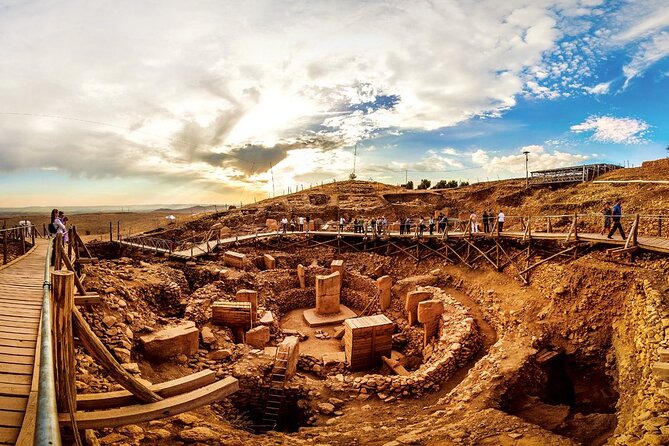
Then the day pivots—hard—from monumental kingship to the deep beginnings of ritual architecture. Göbeklitepe is set in the Germuş mountains of southeastern Anatolia. The core claim is big: it presents monumental round-oval and rectangular megalithic structures erected in the Pre-Pottery Neolithic period between about 9,600 and 8,200 BCE.
This is one of those places where your brain needs a second to catch up. You’re looking at stone work tied to hunter-gatherer societies—long before cities as we know them. That contradiction is exactly what makes Göbeklitepe feel so mind-bending. You’re not just seeing old ruins. You’re seeing evidence that complex belief and organized labor existed earlier than most people expect.
The visit time is listed as about 1 hour. Again, that’s reasonable. This isn’t a “wander for hours and maybe get inspired” site. It’s more like: see the major structures, understand the basic layout, and let the scale sink in. If you’re with a group, a solid guide story helps you interpret what you’re seeing without turning it into a confusing lecture.
If you’re the type who likes details, pay attention to the way the structures are grouped and how the megaliths create enclosure-like spaces. Even without a long sit-down, you’ll start to understand why this site is often discussed as a turning point for how humans organized ritual life.
Day 3: Zeugma Mosaic Museum and how replicas help you picture the city
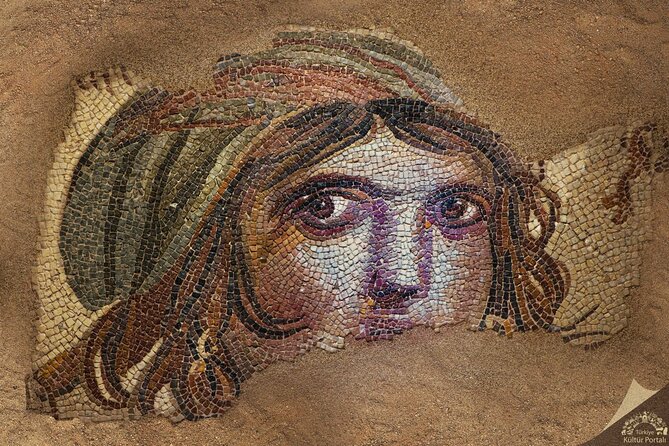
Day 3 lands you at Zeugma Mosaic Museum. The goal here is practical: the museum recreates the lifestyle, culture, and beliefs of the people who lived in the ancient city. Instead of only showing artifacts, it uses full-scale replicas of a street, fountain, building walls, and foundation stones—constructed according to the architecture of the time.
That approach is especially helpful if you’re not a museum-only person. You get a sense of daily space: where you’d walk, how streets would feel, and how buildings relate to each other. It’s the difference between seeing a mosaic as a standalone object versus understanding it as part of a larger living environment.
The listed time is about 1 hour. If you like to read every panel, you might wish for more. But the museum’s strength is that it gives you quick visual anchors. You’ll probably leave with a clearer mental picture of what Zeugma was like, even if you don’t spend hours on every exhibit.
Meals, tickets, and the value math that actually matters
This tour is priced at $984.82 per person and runs about 3 days. What helps the value is what’s included: accommodation for 2 nights, and meals across the trip (2 breakfasts, 2 dinners, 3 lunches). On top of that, admission tickets are included for the listed key stops: Karatay Han, Mount Nemrut, Göbeklitepe, and the Zeugma Museum.
So you’re not paying extra every time you want to enter a major site or trying to budget separately for food on the move. That’s a big deal on longer regional trips, because surprise costs often show up right when your time is tight.
You also get pickup offered and a mobile ticket. Pickup matters because you start the day calmer. Mobile tickets matter because you don’t waste time finding paper confirmations. And because it’s private for your group, you avoid the slowdowns that can come with large group logistics.
One more value point: this tour is built around high-impact sites, not filler. When you’re paying a premium for a multi-day route, you want a package that actually earns the price with the main attractions—and here, the attractions are the point.
Who this fits best (and who might want to adjust expectations)
I’d recommend this tour if you like:
- Big historical contrast: early ritual architecture, monumental royal ideology, and Roman-era urban art.
- Sunrise-style sightseeing where timing is part of the magic.
- A guide-led experience that keeps the story tied together, especially with a guide like Ramazan who’s into Turkish history.
It also seems to work well across age groups. The tour organization has been praised in situations where families included both children (about ages 7–10) and older adults (in their seventies). That suggests the route and pacing aren’t built only for young hikers. Of course, your personal comfort with long drives and early mornings still matters.
Who might reconsider: anyone who hates dawn plans, dislikes crowds in general settings, or struggles with cold mountain mornings. If you’re the kind of traveler who wants slow travel and lots of free time, a tight 3-day itinerary may feel less relaxing than you want.
Weather and timing: the one variable you can’t ignore
The experience requires good weather. That’s not a small detail—Nemrut is outdoors, and dawn viewing depends on conditions. If weather forces a change, you’re offered a different date or a full refund, depending on what the operator can do.
So when you book, treat dates as flexible if you can. If your schedule is rigid, you’ll want travel insurance that covers weather-related disruptions. It’s the difference between being disappointed and being prepared.
Should you book this Southeast Anatolia tour?
If you’re aiming for a three-day stretch where the highlights actually connect—Göbeklitepe’s astonishing early ritual world, Nemrut’s dramatic Commagene statues at dawn, and Zeugma’s visual reconstruction of city life—this tour is a strong choice. The included meals and admissions reduce hassle, and the private-group format helps with pacing on early, long days.
I’d book it if you want a structured route and you’re excited by history that feels big and slightly surreal. I’d skip or modify it if you want a laid-back pace, hate early starts, or you’re sensitive to cold mountain mornings.
If you’re also visiting Cappadocia as part of your bigger Turkey plan, consider tying this tour to the rest of your schedule so you don’t burn out before your other big moments. That way, you get the best out of both: one trip for ancient roots, another for a very different kind of wonder.
FAQ
How long is the Southeast Anatolia Tour?
It runs for about 3 days.
What is the price per person?
The price is listed as $984.82 per person.
Where does the tour operate from?
The location is Goreme, Turkey.
Are pickup and mobile tickets included?
Pickup is offered, and the tour uses a mobile ticket.
Is this a private tour?
Yes. It’s private, so only your group participates.
What meals and lodging are included?
The package includes accommodation x 2, plus 2 breakfasts, 2 dinners, and 3 lunches.
Are admission tickets included for the stops?
Admission tickets are included for the listed stops: Karatay Han, Mount Nemrut, Göbeklitepe, and the Zeugma Mosaic Museum.
What happens if the weather is bad?
This experience requires good weather. If it’s canceled due to poor weather, you’ll be offered a different date or a full refund.
Is cancellation free, and how far ahead can I cancel?
Free cancellation is available up to 24 hours in advance for a full refund. If you cancel less than 24 hours before the experience starts, the amount paid is not refunded.