REVIEW · ISTANBUL
8 Days MINI Group Tour Istanbul, Ephesus, Pamukkale, Konya, Cappadocia
Book on Viator →Operated by Small Group (Max. 10 Pax) & Private Tours in Turkey · Bookable on Viator
Turkey, packed into one calm small group. This 8-day mini-group trip lets you hit Istanbul, Cappadocia, Kusadasi (Ephesus), and Pamukkale without piecing together logistics, and it includes domestic flights plus pre-paid entrances. I especially like the 10-person cap (more guide time, less crowd crush) and the comfortable mix of boutique city hotels with cave and thermal stays. One possible drawback: some days start early and there’s plenty of walking, including underground steps and uneven ancient sites.
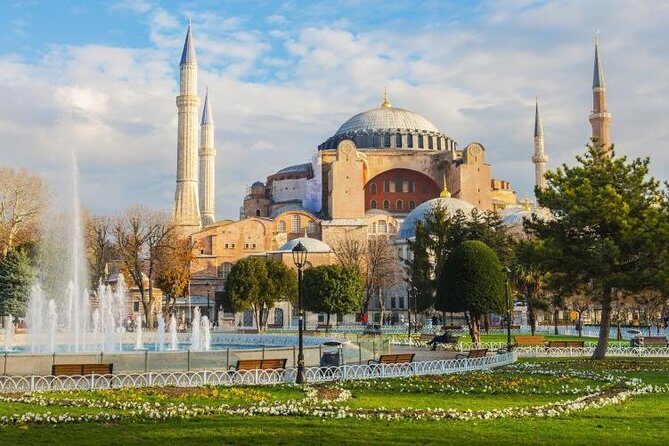
In Istanbul, the “big four” day is built for efficiency: Blue Mosque, Hagia Sophia, Topkapi Palace, and the Grand Bazaar, with tickets handled through the guide. If you’re planning Hagia Sophia interior time, note the updated rule: live guiding isn’t allowed, and you’ll need your phone plus headphones during the visit (you can buy headphones at the entrance for 3.5 USD if needed). The good news is the operator plans backup sights when places close (like switching Topkapi for the Underground Cistern on Tuesdays).
I also like that the tour gives you real hotel time in the most memorable regions—especially the thermal stop at Pamukkale and the cave hotel nights in Cappadocia. If you’re up for a moderate pace (not a couch tour), this format is a smart way to see a lot while still feeling personal.
In This Review
- Key highlights worth getting excited about
- The big picture: what this 8-day route really gives you
- Price and value: what you’re paying for beyond the sticker number
- Getting from airport to hotel: the kind of start that saves energy
- Day 2 in Istanbul: a heavy-hitter day that’s actually timed well
- Blue Mosque and the Iznik tile connection
- Hippodrome Square: the setting for chariot chaos
- Topkapi Palace: the weapons section angle
- Hagia Sophia interior: the phone and headphone reality
- Grand Bazaar: go for context, not just bargains
- Day 3 to Day 4 in Cappadocia: caves, wind-carved shapes, and underground cool-down
- Day 3: Fairy Chimneys and Ozkonak Underground City
- Day 4: Pasabag, pottery in Avanos, Goreme Open-Air Museum, and Uchisar views
- Day 5: Sultanhan Caravanserai, Mevlana in Konya, and reaching Pamukkale with thermal time
- Sultanhan Caravanserai: Seljuk-era stop on the way
- Konya and the Mausoleum of Mevlana
- Pamukkale arrival and thermal hotel check-in
- Day 6: Hierapolis ruins plus Pamukkale terraces—what to expect and how to time it
- Hierapolis: theatre, Apollo, and the Necropolis
- Pamukkale’s travertines: the white cliff that looks unreal
- Day 7: Ephesus day with Mary’s House stop and a long, impressive ruin walk
- Meryemana: pilgrimage site with a mountain setting
- Ephesus: the classics you should not miss
- Artemis Temple: a final “seven wonders” stop
- Hotels, meals, and how inclusion affects your comfort level
- Practical logistics that can trip you up (so you can dodge them)
- Phone and headphones requirement for Hagia Sophia interior
- Baggage allowance on domestic flights
- Museum closures and day-based swaps
- Physical pace
- Who this tour fits best (and who should consider a different style)
- If you care about guides: what you can expect from this operator’s track record
- Should you book this 8-day Turkey MINI Group Tour?
- FAQ
- What is the maximum group size for this tour?
- Are domestic flights included in the price?
- What kind of hotels are included?
- Are entrance fees included?
- What should I know about visiting Hagia Sophia?
- Is meals and breakfast included?
Key highlights worth getting excited about
- 10 people maximum for a more personal feel in crowded places like Istanbul and Ephesus
- Domestic flights included (Istanbul to Cappadocia, and Izmir to Istanbul) to cut travel time
- Hagia Sophia interior rules handled with phone and headphones guidance
- Cave and thermal hotel nights (not just one-off sightseeing)
- Pre-paid entrances to reduce lines at major monuments
- Flexible swaps for closures (Underground Cistern, Spice Market, etc., depending on day)
The big picture: what this 8-day route really gives you
This tour is built around a simple promise: you see the top Turkey hits in a tight timeline, while someone else manages transportation, timing, and ticket logistics. You’re moving between five major bases—Istanbul, Cappadocia, Konya (briefly), Pamukkale, and Kusadasi/Ephesus area—so you’re not burning days on long bus rides.
That’s where the value comes from. At $1,579 per person, you’re paying for a package that combines:
- 7 nights of accommodation (with standout hotel styles in the right places)
- licensed guiding
- multiple entrance fees (not just one or two “must-sees”)
- domestic flights to compress the schedule
- basic meals (7 breakfasts and 2 dinners)
If you’ve tried planning Turkey yourself, you already know the time sink isn’t just the attractions—it’s lining up transport, tickets, and timing across multiple cities. This tour tries to remove that grind.
Other Multi-City Turkey Tours reviews in Cappadocia & central Turkey
Price and value: what you’re paying for beyond the sticker number
Let’s talk money in a practical way. $1,579 is not cheap, but it’s not just paying for access to famous ruins. You’re also buying:
- domestic flights that would otherwise cost time and hassle
- guided visits that keep you from wandering and guessing at what matters
- hotel variety: standard city nights, then cave hotels in Cappadocia, and thermal pools in Pamukkale
- entrance fees that can add up quickly across Istanbul, Cappadocia, and Ephesus
The main trade-off is that this is a mini-group format, so you’re not fully DIY-flexible day to day. You’re following a set rhythm. If you love spontaneity—changing plans mid-day—this might feel a little structured.
But if your goal is to see “the big names” and still sleep well in good locations, the package makes more sense than it first looks.
Getting from airport to hotel: the kind of start that saves energy
Day 1 is straightforward: you arrive at Istanbul Airport (IST) or Sabiha Gokcen (SAW). A representative meets you with a name sign, and you transfer to your Istanbul hotel for the night.
By Day 8, the process is the same idea—check out and private transfer to your airport for the flight home.
Two small details matter here:
- You’re using private transfers both at the start and end (not shared shuttles).
- The tour uses air-conditioned, no-smoking vehicles, which is a real comfort benefit in Turkey, especially when you’re moving between neighborhoods.
If you’ve ever landed mid-day and lost half your first afternoon to figuring out transport, you’ll appreciate how much this reduces stress.
Day 2 in Istanbul: a heavy-hitter day that’s actually timed well
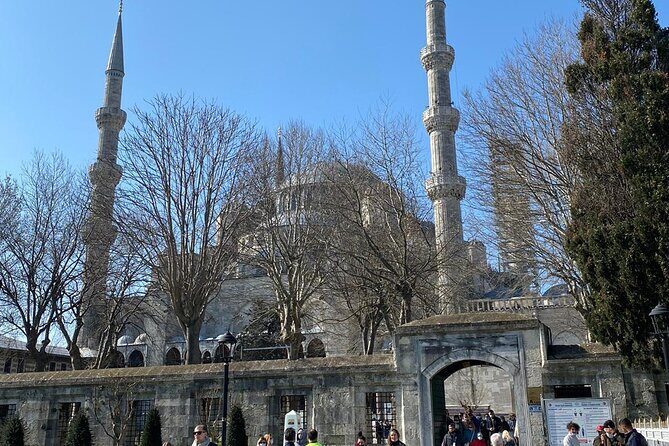
Istanbul day is designed like a checklist—just with guiding and short walks between stops. You’ll start with Blue Mosque, then Hippodrome Square, then Topkapi Palace, then Hagia Sophia, and end with the Grand Bazaar.
Here’s what makes this work for you:
- Blue Mosque and Hippodrome Square are close enough to feel connected rather than like random stops.
- Topkapi and Hagia Sophia are also near, so you get a clean “Imperial Istanbul” theme in one arc.
- Grand Bazaar finishes the day with a change of pace—more sensory, more shopping-focused, more people-watching.
Blue Mosque and the Iznik tile connection
Blue Mosque is famous for its Iznik tiles, so the guided focus helps you notice the details instead of just snapping photos. You’ll also get context on why it became such a symbol of Ottoman design.
Other Small Group Tours reviews in Cappadocia & central Turkey

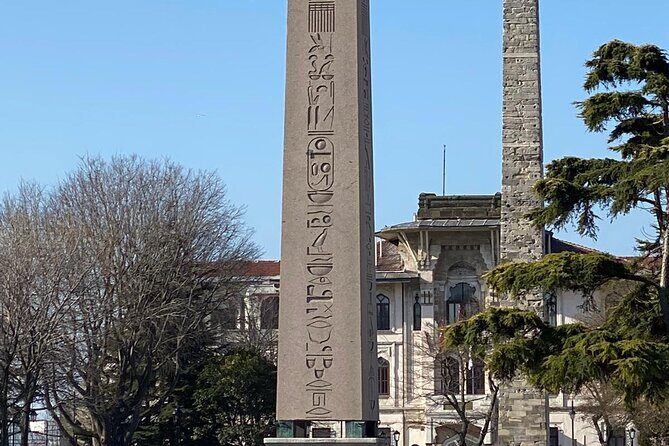
Hippodrome Square: the setting for chariot chaos
Hippodrome Square isn’t a “stand in front of a building” stop. It’s more of a story stop—Roman/Byzantine-era spectacle and political tension. Even if you don’t know the names, you’ll understand what the area was used for.
Topkapi Palace: the weapons section angle
Topkapi can feel like an ocean of rooms. This tour’s stop includes Topkapi Palace with the weapons section, which is a practical choice. It gives you a memorable theme without trying to cover everything.
Hagia Sophia interior: the phone and headphone reality
Hagia Sophia is the big one, and the current operational rule is important:
- live guiding is not allowed inside after January 15, 2024
- you’ll need your smartphone and headphones to follow the audio-style system
- if you don’t have headphones, you can buy them at the entrance for 3.5 USD
The practical win here is that you’re not left to “figure it out alone.” You still get help before/around the interior visit, then you use the provided audio setup yourself.
Grand Bazaar: go for context, not just bargains
Grand Bazaar is one of the oldest covered markets in the world, with 58+ covered streets and over 1,200 shops. You’ll spend time exploring categories like jewelry, pottery, spices, and carpets.
Tip: set your expectation. This is not a quiet museum visit. It’s a working market with crowds. If your goal is shopping, you’ll have time. If your goal is photos and atmosphere, you’ll still get plenty.
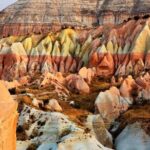
Day 3 to Day 4 in Cappadocia: caves, wind-carved shapes, and underground cool-down
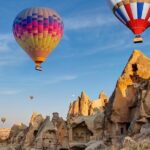
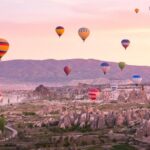
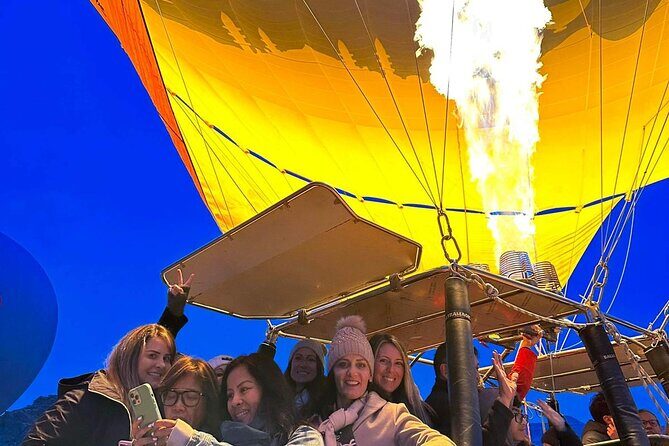
Cappadocia is where this tour starts feeling like a movie set. You fly from Istanbul to Cappadocia early, then your guide meets you and you head right into the sights.
Day 3: Fairy Chimneys and Ozkonak Underground City
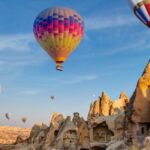
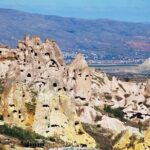
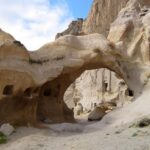
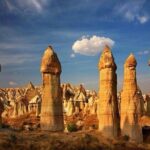
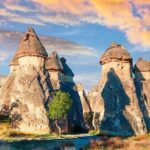
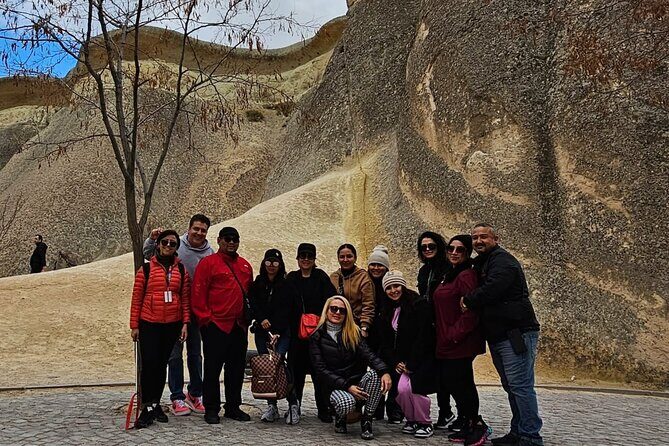
The first stop is Three Sisters Fairy Chimneys in Ürgüp. These are the rock shapes that show up on postcards for a reason. The guide explanation about carved pigeon houses helps you see the formations as something people lived with—not just scenery.
Then comes Ozkonak Underground City. This underground site has multiple strata carved in volcanic granite, connected by tunnels. A notable detail: it includes a pipe communication system and ventilation piping meant for life underground when the city was sealed.
This stop is one of those “choose-your-own-adventure” moments. If you like history that feels physical—stone rooms, corridors, and how people adapted to sieges—you’ll enjoy it. If tight spaces make you uncomfortable, you’ll want to go slow and take breaks.
Day 4: Pasabag, pottery in Avanos, Goreme Open-Air Museum, and Uchisar views
Day 4 mixes big scenery with art and views:
- Pasabag for dramatic “fairy chimney” rock formations
- Avanos for a traditional terra cotta pottery workshop (pottery center since 3000 BC)
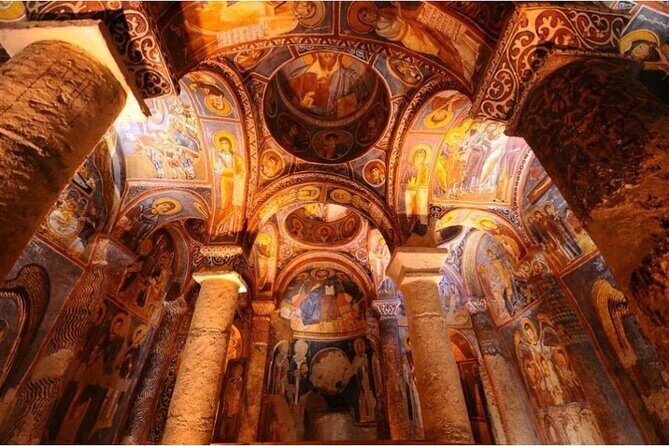
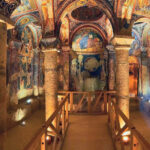
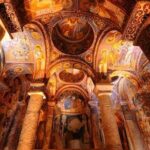
- Göreme Open-Air Museum for rock-cut Byzantine churches and frescoes (10th–13th centuries)
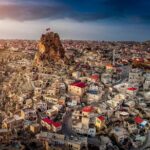
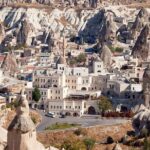
- Uchisar Castle for panoramic valley views
What I like here is the pacing. You’re not just walking in one style. You get rock formations, then a hands-on craft stop, then art in carved churches, then a lookout.
If you’re sensitive to time pressure, know that Göreme and the surrounding rock-cut churches can take more than you think. Don’t treat it like a quick photo stop—set aside time to look closely at the church frescoes.
Day 5: Sultanhan Caravanserai, Mevlana in Konya, and reaching Pamukkale with thermal time
Day 5 is an efficient “transfer + culture + payoff” day. You leave Cappadocia early and head toward Pamukkale with two planned cultural stops.
Sultanhan Caravanserai: Seljuk-era stop on the way
You visit Sultanhan Caravanserai, a 13th-century Seljuk masterpiece. Caravanserais matter because they explain how travel worked across Anatolia long before flights and highways.
Even if you’re not a medieval-architecture nerd, it’s a good reset before you hit another round of museum and ruin time.
Konya and the Mausoleum of Mevlana
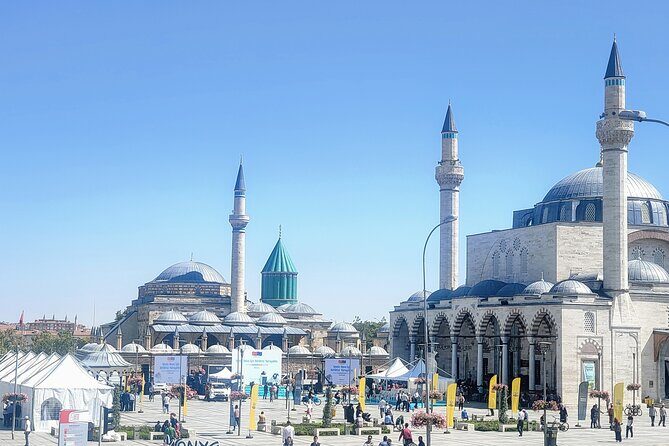
Next is Konya: the Mausoleum of Mevlana, the site tied to the famous mystic. This gives you a meaningful break from the Roman/Byzantine and ancient-Ephesus themes.
Pamukkale arrival and thermal hotel check-in
Then you finally reach Pamukkale and check into a thermal hotel. You’ll have time to swim in the thermal pools until 22:30.
This is one of the biggest practical reasons to like this package. A lot of tours rush through Pamukkale with just a photo stop. Here you get a chance to slow down and soak—especially helpful after long travel days.
Day 6: Hierapolis ruins plus Pamukkale terraces—what to expect and how to time it
Day 6 is the day most people come for: Hierapolis and Pamukkale.
Hierapolis: theatre, Apollo, and the Necropolis
You’ll see the ancient city of Hierapolis, including:
- the Theatre
- the Apollo Temple
- the Necropolis (graveyard)
This is where the ruins feel less “random pile” and more like a planned city. You’ll get a guided sense of how these spaces connected.
Pamukkale’s travertines: the white cliff that looks unreal
Then you get the travertine terraces. Pamukkale’s mineral springs form white mineral deposits that look like snow or cotton balls—hence the Turkish name Pamukkale, often translated as cotton castle.
Practical tip: this is usually a bright, reflective environment. You’ll want sun protection and good footwear. The terraces can feel slick, so don’t rush.
After the visit, you drive to Kusadasi for overnight.
Day 7: Ephesus day with Mary’s House stop and a long, impressive ruin walk
This day is packed, but it’s the kind of packed that pays off. You begin with Meryemana (The Virgin Mary’s House), then head to Ancient Ephesus, and finish with Temple of Artemis.
Meryemana: pilgrimage site with a mountain setting
Mary’s House is located on the Aladag Mountains, about five miles from Ephesus. It’s tied to the claim that Mary lived here after the Council of Ephesus, and it became a pilgrimage site after 1892. Pope Paul VI visited in 1967.
Even if you don’t connect to the religious story, the site’s significance gives it weight. It’s also a welcome change from ruin density—more open air, more quiet feeling.
Ephesus: the classics you should not miss
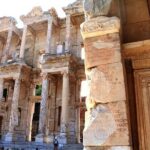
Ephesus is one of those places where your eyes keep finding new details: marble streets and major public buildings along the route. The highlights on this tour include:
- State Agora
- Odeon
- Memnius Monument
- Temple of Domitian
- Curetes Street
- Trajan Fountain
- Baths of Scholastica
- Hadrian Temple
- Latrina
- Celsus Library
- gate of Mihridates and Mazues
- Commercial Agora
- Grand Theater (expanded to about 24,000 spectators by Romans)
If you’re wondering where to focus, Celsus Library and the Grand Theater are your anchors. Everything else helps you understand how the city functioned around those spaces.
Keep in mind: it’s a long walking day. You’ll be moving across uneven ancient ground, so comfortable shoes matter.
Artemis Temple: a final “seven wonders” stop
The Temple of Artemis is tied to the Seven Wonders of the Ancient World. You’ll visit as your last Ephesus-related stop.
If you’re hoping for a fully intact structure, temper expectations. This is a stop for context and scale, not modern reconstruction.
After the Ephesus tour, you drive to Izmir airport for the flight back to Istanbul. Overnight in Istanbul follows.
Hotels, meals, and how inclusion affects your comfort level
Here’s what’s included on accommodation, which is a big part of why this tour feels worth it:
- 7 nights accommodation in 4-star and 5-star hotels
- Istanbul hotel: Yasmak Sultan or Dosso Dossi or Innova or similar
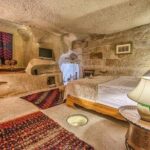
- Cappadocia cave hotels: Melekler Evi Cave or Fresco Konakları or Zeydem Suites Cave Hotel
- Kusadasi hotels: Carina Hotel or Efe Boutique or similar
- Pamukkale thermal hotels: Colossae Thermal or Pam Thermal Hotel or similar
Meals included:
- 7 breakfasts
- 2 dinners
The value of this isn’t just “food included.” It prevents you from having to hunt for reliable meals after long sightseeing days, especially in areas where you might not know your way around.
Transport is also included:
- all airport transfers by private vehicle
- A/C and no-smoking vehicle
Practical logistics that can trip you up (so you can dodge them)
A few rules and timing notes are worth knowing before you pack.
Phone and headphones requirement for Hagia Sophia interior
As noted earlier, live guiding is not allowed inside Hagia Sophia after January 15, 2024. Plan to bring a smartphone and headphones. If you forget headphones, you can buy them at the entrance for 3.5 USD.
Baggage allowance on domestic flights
Domestic flights include check-in and cabin limits:
- 15 kilos check-in
- 8 kilos cabin
Plan your packing so you don’t have to pay extra or scramble at the airport.
Museum closures and day-based swaps
The tour has backup options:
- Tuesdays: Topkapi Palace replaced by the Underground Cistern
- Sundays: Grand Bazaar replaced by Spice Market
- Fridays: Blue Mosque is open from 14:30 to 16:30
- Religious holidays: Grand Bazaar replaced by Arasta Bazaar
This flexibility helps protect your experience even when calendars force changes.
Physical pace
The operator asks for a moderate physical fitness level. That’s reasonable for:
- walking in Istanbul and Ephesus
- underground tunnels in Ozkonak Underground City
- stairs and uneven ground at ancient sites
If you’re nursing injuries or mobility limits, you should think carefully before booking.
Who this tour fits best (and who should consider a different style)
This 8-day tour is best for you if:
- you want the big Turkey sights in one organized trip
- you like guided context so you don’t miss key details
- you enjoy hotel variety, especially the cave and thermal nights
- you prefer a small group (max 10) over mass-market crowds
It may not fit as well if:
- you hate structured schedules
- you want lots of solo free time each day
- you’re not comfortable with long walking days and uneven ancient surfaces
If you care about guides: what you can expect from this operator’s track record
The operator runs small-group tours with licensed guides and drivers. Past groups have referenced guides like Orkan and Leyla in Istanbul, and Sinan for later stages, with drivers such as Murat. Another contact mentioned Fevzi for arranging a customized itinerary quickly.
I can’t guarantee any specific guide for your exact dates, but the names do hint at the kind of local staffing you’re likely to get: professional, paired with the same vehicles and ticket-handling workflow throughout the route.
Should you book this 8-day Turkey MINI Group Tour?
Book it if you want a high-coverage Turkey experience with less planning pain. The strongest reason is simple: you get domestic flights, guided entrances, and stays that match the destinations—cave hotels for Cappadocia and thermal time at Pamukkale—without you doing the scheduling work.
Skip it if you’re the type who wants to wander off-script daily or you’re not comfortable with a moderate walking pace. This is a “see a lot, move every day” style tour.
If you tell me your travel month and what you care about most (ruins, museums, food, photos, relaxing pools, shopping), I can help you decide whether this itinerary’s balance matches your priorities.
FAQ
What is the maximum group size for this tour?
The tour runs with a maximum of 10 travelers.
Are domestic flights included in the price?
Yes. Domestic flights are included for Istanbul to Cappadocia, and Izmir to Istanbul. Baggage limits are 15 kilos check-in and 8 kilos cabin.
What kind of hotels are included?
The package includes 7 nights in 4-star and 5-star hotels. Istanbul hotels are listed as Yasmak Sultan, Dosso Dossi, Innova, or similar. Cappadocia includes cave hotels such as Melekler Evi Cave, Fresco Konakları, or Zeydem Suites Cave Hotel. Kusadasi uses options like Carina Hotel or Efe Boutique. Pamukkale includes thermal hotels like Colossae Thermal or Pam Thermal.
Are entrance fees included?
Yes. Entrance fees are included, and the guide has pre-paid tickets to help skip the line where available.
What should I know about visiting Hagia Sophia?
Live guiding is not allowed inside Hagia Sophia after January 15, 2024. You’ll need a smartphone and headphones during the visit. If you don’t have headphones, you can buy them at the entrance for 3.5 USD.
Is meals and breakfast included?
Yes. The tour includes 7 breakfasts and 2 dinners, but drinks and meals not listed in the included section are not included.