REVIEW · ISTANBUL
5-Day Best of Cappadocia, Pamukkale and Ephesus
Book on Viator →Operated by City of Sultans · Bookable on Viator
Cappadocia feels like a living museum. This 5-day Turkey highlights trip strings together two nights in a cave-style stay and the Aegean’s famous ruins with all-in ground transport, so you spend less time hunting logistics and more time looking at what matters. One real thing to plan for: entrance fees for sites and museums are not included, and you’ll do plenty of walking.
What I like most is how the day-by-day pace matches the variety of the region. I particularly enjoy getting guided explanations on the big stops, like Dennis in Cappadocia, Funda around Pamukkale, and Riza at Ephesus, plus the convenience of included breakfast and lunch on most days.
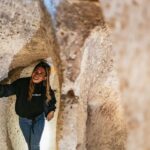
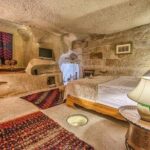
A second consideration is comfort. The cave-hotel style can mean different room setups than standard hotels, so it’s smart to go in expecting a more rustic feel rather than guaranteed modern amenities.
In This Review
- Key things that make this tour worth your attention
- The value of bundling Cappadocia + Pamukkale + Ephesus
- How the 5 days are paced (and how to pack for it)
- Cappadocia Day 1: Fairy chimneys, cave churches, and Uchisar’s views
- Cappadocia arrival area and UNESCO context
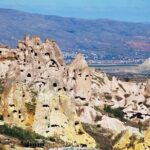
- Devrent Valley: the “fairy chimney” preview
- Pasabag: the mushroom-shaped pinnacles
- Avanos: pottery and crafts country
- Göreme National Park: cave city and early Christians
- Uchisar: the cliff village panorama
- Cappadocia Day 2: more valleys, a pigeon-themed walk area, and Derinkuyu underground
- Red Valley: fairy chimneys in a more spread-out feel
- Cavusin: a longer-feeling valley stop
- Pigeon Valley: where walking makes sense
- Derinkuyu Underground City: the big historical twist
- Day 3 in Kusadasi: setting up your Ephesus visit base
- Pamukkale Day 4: Hierapolis ruins and travertines
- Hierapolis & Pamukkale: Roman ruins plus the cotton-castle effect
- Pamukkale Thermal Pools: what it feels like on the ground
- Day 5: Ephesus, Mary’s House, and Artemis Temple, then onward to Istanbul
- Ancient City of Ephesus: a slow, downhill route through the classics
- Meryemana (The Virgin Mary’s House): a quieter stop with strong meaning
- Temple of Artemis: the “one-time wonder” feeling
- Transfer onward to Istanbul
- Hotels and meals: the convenience you actually feel
- Guides and group size: small enough to ask questions
- Shopping and extra spending: where your money will actually go
- Price and logistics: what $1,199 covers, and what you still need to plan
- Who this tour is best for
- Should you book the 5-Day Best of Cappadocia, Pamukkale and Ephesus?
- FAQ
- Where is hotel pickup offered?
- Is the tour offered in English?
- What’s included in the price?
- Are entrance fees included for the sites?
- How big is the group?
- How long is the tour?
- Does the tour include cave hotel time in Cappadocia?
- Can I cancel for a full refund?
Key things that make this tour worth your attention
- Two nights in a cave hotel in Cappadocia, giving you the whole “stay inside the geology” experience, not just a day trip
- UNESCO sites stitched together efficiently, from fairy-chimney valleys to Roman layers at Ephesus and Hierapolis
- Curated valley stops in Cappadocia, including Devrent, Pasabag, Göreme, Uchisar, plus Red and Pigeon Valley
- Derinkuyu underground city, a dramatic change of pace from above-ground viewpoints
- Pamukkale + Hierapolis as one focused day, built around travertines and Roman ruins
- Small-group feel, with a maximum of 15 travelers and English-speaking support
The value of bundling Cappadocia + Pamukkale + Ephesus
At $1,199 per person, this package isn’t cheap, but it is built to reduce the cost of stress. You’re paying for internal flights, 4 nights of accommodation, English-speaking guiding, included breakfast and lunch, and the ground-transport piece that usually turns a “simple” itinerary into a spreadsheet project.
Where value really shows is the structure. Instead of bouncing between single-day tours, you get one continuous flow: Cappadocia first, then the Aegean coast area near Ephesus, then a final push to Istanbul after Ephesus. That matters because these destinations are separated by real driving distance, and “saving money” by doing it all yourself often costs more time than it saves cash.
Other Multi-City Turkey Tours reviews in Cappadocia & central Turkey
How the 5 days are paced (and how to pack for it)
The route is designed around moving you to the next region before you’re exhausted. Cappadocia gets two full days of viewpoints and walking areas. Then day 3 transitions you toward the coast and Ephesus region. Day 4 focuses on Pamukkale and Hierapolis. Day 5 is classic Ephesus, then a religious-cultural stop, then the Artemis Temple site, and finally transfer onward for the flight back to Istanbul.
Pack like you’re going to walk every day. Even when some stops list 45 minutes to 1.5 hours, you’re dealing with stairs, uneven paths, and short uphill segments. Comfortable shoes matter more here than “pretty” footwear.
Also plan for spending money on top of the tour price. Entrance fees for museums and sites are not included, so budget for the major ticketed areas (especially in Pamukkale and Ephesus).
Cappadocia Day 1: Fairy chimneys, cave churches, and Uchisar’s views
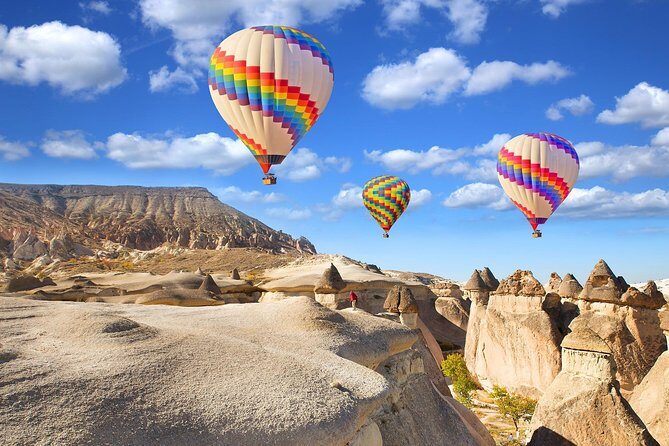
Day 1 is the Cappadocia foundations day: you start in the UNESCO zone area and then work through the most recognizable formations, ending with a big panoramic payoff.
Cappadocia arrival area and UNESCO context
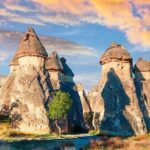
You begin with time in Cappadocia, a UNESCO World Heritage area that spans roughly 40 km between Avanos and Ürgüp. You’re not just looking at random rocks here. The whole point is that the geology created the fairy chimneys, and humans shaped the result with cave homes and religious spaces.
If you like context, this is the kind of day that helps you connect what you see in the valleys with how the region worked historically.
Devrent Valley: the “fairy chimney” preview
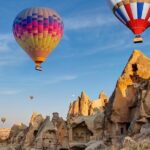
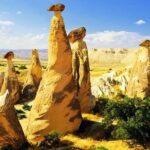
Devrent Valley is the opening act for the chimney formations, known for their unusual shapes. Expect great photo spots, but also plan that you’ll be scanning for the shapes the guide points out. The view is the star, not the gift-shop loop.
Other Cappadocia Highlights & Best-of Tours reviews in Cappadocia & central Turkey
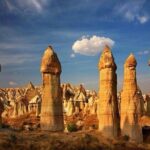
Pasabag: the mushroom-shaped pinnacles
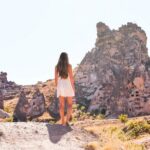
At Pasabag, you focus on the mushroom-like pinnacles—some of the most dramatic forms in the region. This is one of the stops where a guide’s pointing really helps. If you go without interpretation, it’s still pretty, but with it you start seeing patterns and why certain areas look the way they do.
Entrance fees aren’t included for Pasabag, so keep that in mind.
Avanos: pottery and crafts country
Avanos adds a human layer. It’s known for pottery, plus silk, wool, and carpet weaving, along with wine cultivation and general agriculture. This is a nice counterbalance to all the rock formations. Even if you don’t buy anything, it helps you understand that Cappadocia wasn’t only a scenic backdrop—it was a working region with crafts and trade.
Göreme National Park: cave city and early Christians
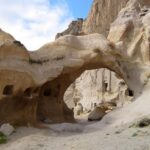
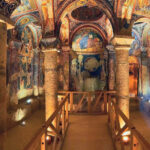
Göreme National Park is where the “how people lived” story takes over. The stop includes the famous small cave-city area and historic cave churches created by early Christians. You get a museum-style presentation of that deep past, but the main feeling is the physical scale of the cave settlement.
Entrance fees are listed as not included here. It’s worth treating this as a priority ticket day.
Uchisar: the cliff village panorama
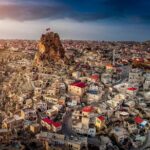
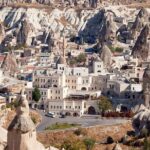
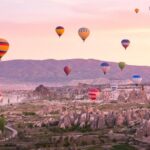
Uchisar closes day 1 with the “look down over everything” moment. The village sits on higher ground and gives wide views over the area. Even if you don’t love heights, this is often the stop that makes Cappadocia feel real, because you can finally connect the valley formations to where they sit.
Cappadocia Day 2: more valleys, a pigeon-themed walk area, and Derinkuyu underground
Day 2 keeps Cappadocia moving, but the variety changes. You go from valleys to underground history, which is a smart way to avoid “same scenery, different sign” fatigue.
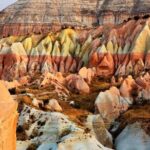
Red Valley: fairy chimneys in a more spread-out feel
Red Valley is known for its fairy chimneys and distinctive views. The included time is long enough to walk a little, pause for photos, and still keep the day on track. Entrance fees are included here, which is a small but helpful cost win.
Cavusin: a longer-feeling valley stop
Cavusin sits between Göreme and Üçhisar. This stop is listed as an hour and is described as having a mystic ambiance due to the formations and time-worn feel of the valley. It’s also a reminder that Cappadocia isn’t only about the postcard formations—you’ll see the calmer, less crowded parts too.
Pigeon Valley: where walking makes sense
Pigeon Valley is explicitly noted as good for walking, trekking, and hiking, with big plain land areas. If your feet are holding up, this is one of the better spots to stretch into the scenery instead of just rushing past it.
Entrance fees are included for this stop.
Derinkuyu Underground City: the big historical twist
Derinkuyu Yeraltı Şehri is one of Cappadocia’s most famous underground cities. This is a different kind of awe: instead of open-air views, you’re dealing with human engineering made to protect life and faith. The structure is part of UNESCO, and the site is listed with entrance fees not included.
If you only have energy for one “history gut-punch” outside the ruins, this is the day’s strongest candidate.
Day 3 in Kusadasi: setting up your Ephesus visit base
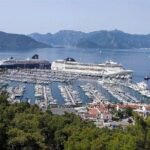
Day 3 includes Kusadasi on the Aegean coast. It’s described as a well-known tourist center and a cruise port, and it’s also positioned as a practical base for Ephesus (not far away).
This day is mainly about getting you comfortably situated for what comes next. You’ll have time in Kusadasi itself, but the real payoff is that you won’t feel like you’re fighting traffic and distance before your Ephesus day.
Pamukkale Day 4: Hierapolis ruins and travertines
Day 4 is a full-focus day: Hierapolis and Pamukkale get handled together, then you continue with the thermal pool area.
Hierapolis & Pamukkale: Roman ruins plus the cotton-castle effect
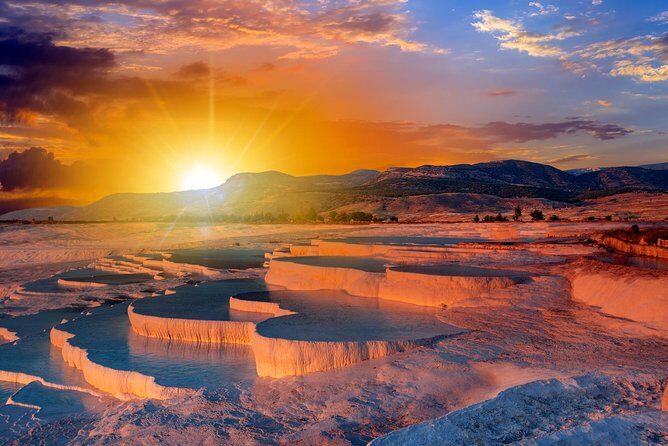
Hierapolis is associated with the Roman city layer, and Pamukkale is described as the travertines, often called the Cotton Castle. You’ll also hear about Roman remains like sarcophaguses and other ruins.
Even though the stop description includes religious and historical references, the key takeaway for your planning is simple: this is a walking day with visual emphasis on the travertines. Entrance fees are not included for this part, so treat it as a ticketed “main event.”
Pamukkale Thermal Pools: what it feels like on the ground
The thermal pools stop is about the visual spectacle and the chance to walk among the travertines and remains. The timing is listed as about an hour, so you’ll want to move efficiently and not lose time to indecision.
A practical tip from the real world: the Cleopatra pool area can be crowded. If that’s on your checklist, go with the expectation that you may have to tolerate lines or wait for space, then prioritize the travertine views you can access without burning your whole hour.
Day 5: Ephesus, Mary’s House, and Artemis Temple, then onward to Istanbul
Day 5 is where the tour earns its “best of” label in a big way. Ephesus is not a quick stop. It’s a downhill walk through major Roman highlights, which is exactly how a guided approach helps you keep meaning connected to what you see.
Ancient City of Ephesus: a slow, downhill route through the classics
You enter via the Magnesia Gate and begin a downhill progression past major landmarks: the Odeum, the Celsus Library, the Temple of Hadrian, the Fountain of Trajan, and the Great Theater.
This is one of those ruins where timing and pacing matter. With a guide, the route becomes a story: you understand why each building sits where it does and what it implies about the city’s role.
Entrance fees are not included here, so budget for it. Also expect walking and uneven surfaces.
Meryemana (The Virgin Mary’s House): a quieter stop with strong meaning
Meryemana is tied to the belief that Mary spent her last day and connects to the Basilica of St. John area. It’s a different type of visit than the Roman structures. The feeling is more contemplative, and the stop works well as a reset after Ephesus’s large-scale archaeology.
Again, entrance fees aren’t included for this stop.
Temple of Artemis: the “one-time wonder” feeling
The Temple of Artemis is described as one of the Seven Wonders of the Ancient World. Even if the surviving remains are limited, it still has that “big past” effect. A short guided visit helps you picture what’s missing and why people cared.
Transfer onward to Istanbul
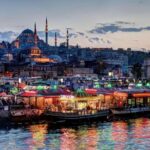
After the tour, you transfer to Izmir Airport for the flight back to Istanbul. The tour ends upon arrival. This final movement is practical: you finish your Aegean-side sightseeing and then move quickly toward your departure city.
Hotels and meals: the convenience you actually feel
This package includes 4 nights of accommodation and meals that reduce daily decision-making. You get breakfast for 4 days and lunch for 4 days. That means you’re not constantly scanning menus or paying for every meal while you’re tired.
Based on the typical hotel pairing for this route, expect cave-style lodging in Cappadocia (like Luva Cave Hotel) and a more standard coast stay near Kusadasi (like Efe Boutique hotel). The cave-hotel feel can be romantic, but it can also come with tradeoffs like limited A/C in some rooms, and sometimes breakfast is handled in a different place than where you sleep.
One more note: the tour includes pickup from centrally located hotels in areas like Taksim, Beyoğlu, Şişli, Beşiktaş, Fatih, Sultanahmet, and Old City Fatih. That’s good news if your lodging is in an area with easy access, because it reduces delays.
Guides and group size: small enough to ask questions
The tour caps at 15 travelers, which is the sweet spot for a highlights program like this. It’s large enough that you won’t feel stranded, but small enough that your guide can answer questions without the group feeling like a herd.
The guide names you may encounter help you connect the experience to the person teaching it: Dennis in Cappadocia, Funda in Pamukkale, and Riza in Ephesus. When a guide has that kind of coverage across regions, you get consistent interpretation instead of repeating yourself to a new person every day.
Also, transfers are described as on time and professional, which matters because the itinerary is packed. Good timing keeps you from feeling rushed at the very sites you paid for.
Shopping and extra spending: where your money will actually go
This route gives you multiple chances to pick up souvenirs, but it also includes a built-in cost trap: shopping stops can add to your budget fast.
A useful rule from real experience: if you want to shop for crafts, do it in Cappadocia and not on the way to Pamukkale, where items may feel overpriced. If you’re buying pottery or textiles, Cappadocia’s craft identity is the most logical place to match what you’re seeing.
And if you’re approached for payment or transactions, don’t hand over cash without a receipt and don’t pay in advance for anything unclear. A little financial caution will protect your trip.
Price and logistics: what $1,199 covers, and what you still need to plan
Here’s the practical math you should do before you book:
Included in the $1,199:
- Domestic/internal flight tickets
- 4 nights accommodation
- Breakfast (4) and lunch (4)
- Mobile ticket
- English guidance
- All-inclusive ground transportation
- Hotel pickup from centrally located areas (as listed)
Not included:
- Entrance fees to museums and sites
So the real question becomes: can you handle paying ticket extras while keeping the convenience? If you’re the kind of traveler who values guided pacing and wants internal flights plus transfers handled for you, this is a reasonable way to cover three major regions without building your own itinerary.
If you’re trying to minimize add-on costs and you prefer self-guided travel, you might feel the missing entrance fees more than someone who’s happy to pay for guided time.
Who this tour is best for
This tour is a strong fit if you want:
- A structured highlights itinerary with guidance
- A real taste of multiple UNESCO-level regions
- Two nights in a cave-style experience
- Included meals and smooth transport so you don’t spend your whole trip planning
It’s less ideal if you:
- Hate walking and uneven paths
- Need very controlled hotel comfort standards (especially in cave-style properties)
- Want total price certainty without paying for entrance tickets
Should you book the 5-Day Best of Cappadocia, Pamukkale and Ephesus?
I’d book it if your priority is seeing the big-name places with less friction. The cave-hotel time in Cappadocia plus the Roman scale of Ephesus is a great combo, and the included meals and transport make the schedule feel doable instead of exhausting.
I would hesitate if you’re budget-sensitive about entrance fees, or if you don’t want a day-by-day rhythm that involves lots of walking. If that’s you, consider mixing self-guided time with guided highlights—or at least plan the extra tickets before you go.
If you do book, bring good shoes, budget for entrance fees, and keep expectations realistic about crowds at popular spots like the Cleopatra pool area. Do that, and you’ll get a trip that feels full without being chaotic.
FAQ
Where is hotel pickup offered?
Pickup is offered from centrally located hotels in Taksim, Beyoğlu, Şişli, Beşiktaş, Fatih, Sultanahmet, and Old City Fatih areas.
Is the tour offered in English?
Yes. The tour is offered in English.
What’s included in the price?
The tour includes domestic/internal flight tickets, 4 nights accommodation, 4 breakfasts, 4 lunches, and all-inclusive ground transportation. A mobile ticket is also provided.
Are entrance fees included for the sites?
No. Entrance fees to museums and sites are not included.
How big is the group?
The tour has a maximum of 15 travelers.
How long is the tour?
It’s listed as 5 days (approximately).
Does the tour include cave hotel time in Cappadocia?
Yes. The experience includes two nights in a cave hotel in Cappadocia.
Can I cancel for a full refund?
Free cancellation is available if you cancel up to 24 hours in advance of the experience’s start time for a full refund.