REVIEW · ISTANBUL
7 Day Istanbul-Cappadocia-Ephesus-Pamukkale Tour (Balloon Ride)
Book on Viator →Operated by Turkey Private Tours · Bookable on Viator
That first morning coffee in Istanbul feels earned. This 7-day Turkey loop strings together big classics with minimal long-distance hassle. You’ll fly between regions, sleep in a Cave Hotel in Cappadocia, and see Roman, Byzantine, and Ottoman landmarks all in one trip.
I especially like how the days are paced with purpose: you get major sites without spending your whole time staring at a bus window. Two standouts for me are the Cappadocia rock-cut history (underground cities and the Göreme churches) and the contrast of Ephesus + Pamukkale on the Aegean side.
One consideration: the hot air balloon ride is optional and depends on weather, so you should treat it as a bonus—not the only reason to book.
In This Review
- Key highlights at a glance
- 7 Days, Three Regions: The Smart Way to See Turkey Without Burnout
- Day One Istanbul: Sultanahmet Sights on Foot, Plus Bazaar Time
- Hagia Sophia and Blue Mosque: What to Expect and How to Plan Your Time
- From Istanbul to Cappadocia: Morning Flights and the Cave Hotel Feeling
- South Cappadocia Valleys: Love Valley, Red Valley, and Çavuşin
- Göreme Open-Air Museum and Pasabag: The Cappadocia Day That Feels Educational
- Avanos and Devrent: Craft Workshops and Imagination Valley
- The Flight Toward Izmir and What Changes for Your Sleeping Plan
- Ephesus: The Port City That Still Makes Christian History Concrete
- Hierapolis Museum and Pamukkale’s Cotton Castle Effect
- Back to Istanbul: A Flight, Then a Final Day of Choice
- Balloon Ride Option: Worth It, With Weather Reality
- Price and Logistics: Does $1,750 Feel Like Value?
- Should You Book This 7-Day Istanbul–Cappadocia–Ephesus–Pamukkale Tour?
- FAQ
- Is the hot air balloon ride included in the tour price?
- What is the tour duration?
- What’s included in the price?
- What is not included?
- Which cities and regions does this cover?
- Do you offer pickup in Istanbul?
- What luggage allowance do I get for the domestic flights?
- Can balloon flights be canceled, and what happens then?
- Is this tour private or small group?
Key highlights at a glance
- Flight connections cut the travel time between Istanbul, Cappadocia, Izmir/Ephesus area, and Pamukkale/Denizli
- Cave Hotel in Cappadocia means you’re in the right setting for the sunrise vibe
- Private guidance in Istanbul for the Sultanahmet walking day (and guided touring elsewhere)
- UNESCO stops like Göreme Open-Air Museum and the Pamukkale thermal area
- Optional balloon ride with a full refund if balloon flights are canceled due to weather
- Ibrahim support shows up in the service style, with follow-through that keeps plans smooth
7 Days, Three Regions: The Smart Way to See Turkey Without Burnout
This route makes a clear promise: you’ll see Istanbul, Cappadocia, and the Aegean region in one week without trying to cram in every detour on your own. The tool that makes it work is the internal flights. Instead of losing half your trip to roads, you’re spending your time where Turkey is strongest—at historic sites and scenic viewpoints.
The group option is kept small (up to 15), and there’s also a private version if you want your own pace. If you like structure but still want some freedom (especially for meals), this kind of setup hits a good balance.
You do need to accept one reality: it’s a packed week. Even with flights doing the heavy lifting, you’ll move every day, so comfortable shoes and a calm mindset are part of the deal.
Other Hot Air Balloon Flights reviews in Cappadocia & central Turkey


Day One Istanbul: Sultanahmet Sights on Foot, Plus Bazaar Time
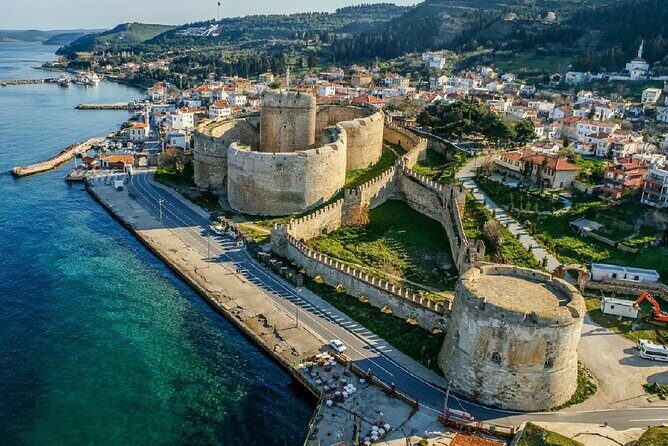
Your first full sightseeing day is centered around Sultanahmet Square and the old-city highlights. You’ll walk past the Byzantine Hippodrome area and see big-ticket landmarks that explain how Constantinople became Istanbul. The stop list is classic for a reason, and the timing gives you time to actually enjoy the details instead of just rushing through photos.
You start with the Sultanahmet area’s historic markers, including the Serpentine Column, the Egyptian Obelisk, and the German Fountain of Wilhelm II. Even if you don’t know the names yet, you’ll get context from the guide, and that makes the stone monuments feel less like random stops.
From there you hit the religious and imperial icons: Hagia Sophia, the Blue Mosque, and then the Topkapi Palace grounds. Some entries are marked as not included in the package, so expect to pay on your own for certain indoor sections. That’s normal for big museum and mosque admissions, but it matters for budgeting.
The day also includes the Basilica Cistern, that underground water tank turned visitor site. It’s one of those places where the temperature and acoustics change your mood fast. And yes, it’s a worthwhile break from sunlight after you’ve been walking for hours.
Then the focus shifts to local life with the Grand Bazaar. You’ll find hand-made carpets, jewelry, antiques, silk products, and spice shops—exactly the mix you’d hope for in a historic market setting. I like bazaar time on a guided day because you can ask questions and get your bearings fast.
The final note is the Bosphorus Strait stop, where the city’s geography becomes a story. You’ll see how Istanbul physically divides Europe and Asia, and you’ll spot major bridge connections along the way.
Hagia Sophia and Blue Mosque: What to Expect and How to Plan Your Time
These stops are the reason most people put Istanbul on their list. Hagia Sophia’s long history is part of the experience: it was built as a church under Byzantine rule, converted to a mosque during the Ottoman period, used as a museum for about 75 years, and is now used as a mosque again. You’ll also hear about its architectural legacy as one of the oldest and most important structures in Istanbul.
The Blue Mosque is visually easy to love: six minaretes and the Iznik tile work inside are the signature. The important practical tip is that religious sites can mean changing access patterns based on services and rules. Build a little flexibility into your expectations.
If you’re someone who likes to take your time indoors, remember that some entrances are not included. That doesn’t make the tour worse—it just means you should treat your Istanbul day as a mix of included viewing and a few paid entry moments.
From Istanbul to Cappadocia: Morning Flights and the Cave Hotel Feeling
The transition day starts early. You’ll be picked up from your hotel, transferred to the airport, fly to Cappadocia, and then join a South Cappadocia route. This is one of those “quietly brilliant” choices: you start sightseeing in Cappadocia without spending the entire day transferring.
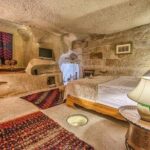
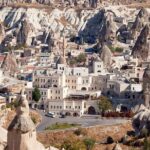
By the end of the day, you stay overnight in a Cave Hotel. That changes your experience more than you might expect. When you step outside after dark, the “rock town” setting feels real, not like a backdrop.
Your route mixes underground history with viewpoint time and rock valleys. In Cappadocia, the geology is the guide too. It explains why these places were defensible, walkable, and survivable long before modern roads.
You’ll visit Kaymakli Underground City, carved into soft volcanic rock. It’s described as multi-level and used as a refuge by early Christians. You’ll see narrow tunnels and areas that functioned like daily-life spaces—living quarters, storage, stables, kitchens, and ventilation shafts. That kind of design detail makes it clear the underground wasn’t just hiding; it was organized living.
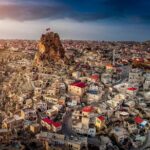
Then you head to Uchisar Castle, the highest point in the region. It’s a massive rock formation carved like a fortress with rooms, tunnels, and stairways. The value here is the payoff: the views help you understand how all those fairy-chimney valleys connect.
South Cappadocia Valleys: Love Valley, Red Valley, and Çavuşin
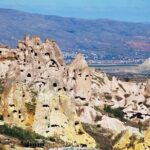
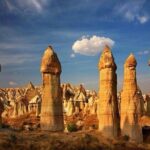
South Cappadocia keeps rolling, and that’s good if you want variety. Love Valley is known for its distinctive rock shapes, often described as phallic-shaped rock formations from volcanic activity and erosion. It’s a popular walking and photo stop, and the timing matters because sunrise and sunset usually give the best colors.
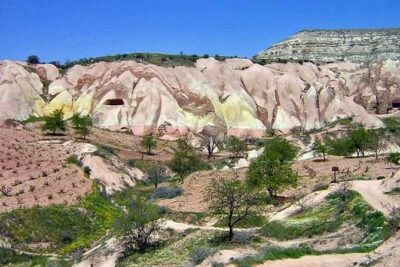
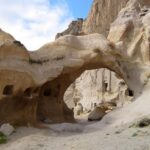
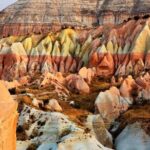
Red Valley leans more into mood. You get red and pink rock tones and scenic trails, plus the valley’s older layers—ancient rock-cut churches and cave dwellings. Even if you don’t go long on hikes, the area gives you that “I’m inside the planet” feeling that Cappadocia delivers.
Then comes Çavuşin Village, known for rock-cut dwellings and churches. You’ll visit rock churches connected to early religious history (including the Church of St. John the Baptist, as described on this route). This is where the scenery starts to feel inhabited, not just dramatic.
If you’re the kind of traveler who likes “one area, many angles,” this sequence works. If you prefer fewer stops and longer stays in fewer places, you might feel the pace. Either way, you’ll end the day ready for a proper rest in that cave setting.
Other Multi-City Turkey Tours reviews in Cappadocia & central Turkey


Göreme Open-Air Museum and Pasabag: The Cappadocia Day That Feels Educational
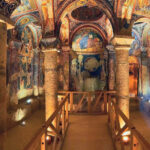
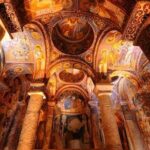
The next big Cappadocia day is built around UNESCO experiences. The Göreme Open-Air Museum is the core stop, with rock-cut churches and monasteries from the Byzantine period. The walls are famous for preserved frescoes showing religious scenes, and the setting among fairy-chimney formations turns it into more than “just another museum.”
Then you move to Pasabag (Monks Valley) for the signature fairy chimneys. The key detail is the shape: tall rock pillars, and in some cases multiple caps. The route also notes ancient dwellings and churches carved into the rock, plus vineyard areas nearby.
After that, you get a viewpoint moment at Göreme Panorama, which frames what you just saw. Even though viewpoints can feel optional on paper, this one helps connect the dots across valleys and chimneys. It’s the sort of stop where a photo is nice, but a little context makes it better.
Avanos and Devrent: Craft Workshops and Imagination Valley
A good break from the biggest monuments is when Cappadocia turns hands-on. Ürgüp gives you a town context—cave hotels, plus wineries and a winemaking tradition. From there, Avanos brings in the crafts side: pottery-making heritage that goes back millennia.
On this route, you also get a chance to do practical cultural activities. You’ll have time to try a pottery demonstration, plus Turkish carpet weaving and handmade onyx making. That’s valuable because it’s participatory, not just watching.
For scenery without heavy history, Devrent Valley (also called Imagination Valley) uses animal-like rock formations as the hook. It’s a lighter stop with a calm walking feel, and you can take photos at your own tempo.
The Flight Toward Izmir and What Changes for Your Sleeping Plan
At the end of the Cappadocia portion, you fly toward the Izmir area. The schedule can shift where you sleep the night—either back in Cappadocia or closer to Ephesus—depending on flight timing. That’s not unusual on multi-city tours, but it does mean you should pack flexibly for a possible change in your base area.
The practical takeaway: you’re not stuck with only one rigid hotel location. The tour is trying to protect your sightseeing time by aligning routes with flight schedules.
Ephesus: The Port City That Still Makes Christian History Concrete
When you reach the Aegean side, the focus lands on Ephesus, one of Turkey’s biggest historical stages. You’ll see major structures like the Library of Celsus, the Temple of Hadrian, and the Amphitheater, plus other notable ruins. Ephesus matters in Christian tradition too, since it’s referenced as one of the Seven Churches in the Book of Revelation.
If you’re the type who likes to understand why a site is famous, this day gives you reasons beyond architecture. The Roman/imperial scale is clear, but the religious and community importance adds another layer.
Then you move to Meryemana (The Virgin Mary’s House) on Bulbul Mountain near Selçuk. The story shared on this route connects to Saint John bringing Mary there about six years after Jesus’ death. Even if you don’t treat religious history the same way you treat Roman history, the location and setting can still leave a strong impression.
After that you get Temple of Artemis, described as one of the Seven Wonders of the World. The route notes its origins connected to Lydia’s King Croesus. This stop works best if you remember that you’re seeing the remnants of something that was once far grander.
Finally, there’s Harbour Gymnasium, including the hamam area described as being like a small lake now, with plans by the government mentioned to restore it. That kind of “in-between” site is interesting because it shows how history keeps changing long after the major builders are gone.
Hierapolis Museum and Pamukkale’s Cotton Castle Effect
The Pamukkale day is built around thermal springs and Greek/Roman archaeology. You start at Hierapolis Archaeology Museum, an ancient city area now converted into museum space. The route highlights that the region was visited for thermal springs since Ancient Greeks, and that it’s recognized as a UNESCO heritage site (added in 1988).
Then comes Pamukkale Thermal Pools, known as the Cotton Castle for its appearance. You’ll see carbonate mineral deposits formed by flowing spring water. The tour describes it as associated with healing skin disease—so you’ll likely notice visitors who treat this as part spa, part sight.
You also have the Cleopatra Pools option above the travertine. This is where you can bath and swim according to the route description. The important practical point: this stop is marked as not included for entry here, so expect an extra fee if you want to do the water time.
Pamukkale is one of those places where the “walk slowly” rule matters. You’re looking at uneven stone surfaces and bright mineral colors, so you’ll want time to step back and view how water changes the texture and color.
Back to Istanbul: A Flight, Then a Final Day of Choice
After Pamukkale, you fly from Denizli Airport to Istanbul (the route uses SAW or IST for transfers). Then you’re back in the Istanbul rhythm: hotel check-in, evening at your own pace, and a final day that’s flexible.
That last day is more about logistics and personal time than forced sightseeing. You can use it to revisit what you loved, shop for a few things that caught your eye, or simply slow down after days of structured touring. Then the tour arranges your airport transfer based on your international flight schedule.
Balloon Ride Option: Worth It, With Weather Reality
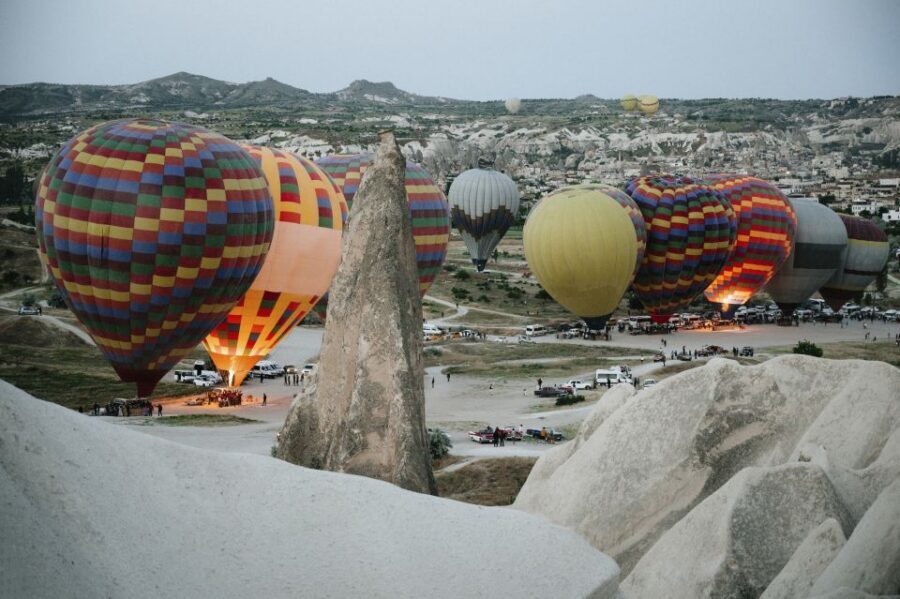
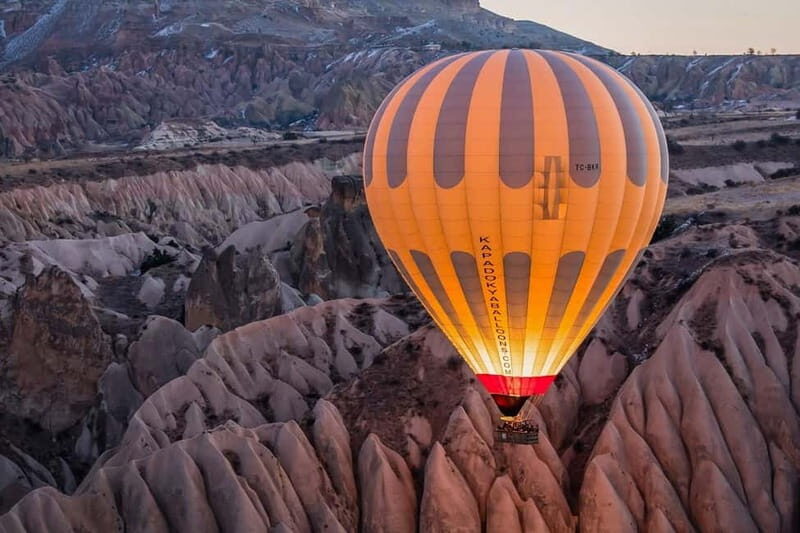
The big headline is that the hot air balloon ride is optional and not included in the main price. You can request it during booking, and balloon ticket prices vary by season and demand.
The key thing I’d tell you upfront: flights need optimum weather, and balloon flights can be canceled by the Civil Aviation Authority at any time for safety. If your balloon ticket reservation is canceled due to weather conditions, you receive a full refund.
So is it worth adding? If you want that famous aerial look over Cappadocia’s fairy chimneys and valleys, yes. But plan it like you’re buying a fantastic opportunity, not scheduling certainty. Cappadocia has enough history and viewpoints that the trip still works even if the balloon day doesn’t happen.
Price and Logistics: Does $1,750 Feel Like Value?
At $1,750 per person for roughly a week, the question is what you’re buying besides a checklist. You’re buying domestic flights, several key entrance fees (the ones listed as included), and a daily rhythm that’s designed to connect major sites with minimal backtracking. You’re also getting breakfasts (5) and lunches (4) included, which can quietly save money and stress.
This price is more likely to feel fair if you would otherwise spend time booking internal flights, lining up guides, and figuring out how to move between regions. If you’re comfortable planning every transfer on your own, you could DIY parts of this cheaper. But most people don’t want that second job while on vacation.
Two extra notes matter for budgeting:
- Some major attractions during Istanbul may have entry fees not included (based on the tour’s marked list).
- The balloon ride is separate and can change in price with demand.
Should You Book This 7-Day Istanbul–Cappadocia–Ephesus–Pamukkale Tour?
I’d book it if you want a one-week route that hits the headline Turkey experiences with real structure: Istanbul’s imperial sites, Cappadocia’s underground and rock churches, Ephesus’s Roman scale, and Pamukkale’s thermal terraces. It’s also a solid fit if you like guided context, especially on the Istanbul walking day.
Don’t book it if you hate schedule pressure or you’re hoping for a trip where you never pay extra for entries and activities. Since some sites aren’t included and the balloon ride is optional, it’s better to go in prepared.
If you do book, my best practical advice is simple: wear good shoes for Istanbul walking, keep a little cash/card ready for entrance add-ons, and treat the balloon as a bonus plan that you’re excited about but not dependent on.
FAQ
Is the hot air balloon ride included in the tour price?
No. The balloon ride is listed as an optional activity, and you need to reserve the balloon flight ticket separately during booking (using the special requests section). Prices vary by season and demand.
What is the tour duration?
The tour is described as 7 days (approx.).
What’s included in the price?
Domestic fly tickets between cities, the entrance fees that are explicitly marked as included, and meals: breakfast (5) and lunch (4).
What is not included?
Beverages during lunch and the balloon flight tickets (you need to secure these separately). Some specific site entrances are also marked as not included.
Which cities and regions does this cover?
Istanbul, Cappadocia, Ephesus (Aegean region), and Pamukkale (Denizli area).
Do you offer pickup in Istanbul?
Yes. Pickup service is available from various hotels in Istanbul, and pickup time may be adjusted based on flight schedules to match Cappadocia tours.
What luggage allowance do I get for the domestic flights?
Economy class includes 15 kg check-in luggage and 8 kg hand baggage per domestic flight. If you need more, you should contact the provider directly.
Can balloon flights be canceled, and what happens then?
Yes. Balloon flights require optimum weather conditions and can be canceled by the Civil Aviation Authority for safety. If your balloon flight reservation with the provider is canceled due to weather conditions, you receive a full refund.
Is this tour private or small group?
This tour/activity offers two options: a small group tour with a maximum of 15 people, or a private tour exclusive to your group.